Search is changing quickly, and content visibility is no longer limited to traditional ranking pages. According to the journal GEO: Generative Engine Optimizat…
Search is changing quickly, and content visibility is no longer limited to traditional ranking pages. According to the journal GEO: Generative Engine Optimization by Pranjal Aggarwal et al. (2024), Generative Engine Optimization (GEO) is a new framework for improving how content appears in AI-generated search answers, especially when people rely on generative engines instead of classic search results.
The study behind GEO shows that old SEO tactics are not always enough in this environment. It also shows that content improvements like quotations, statistics, and credible citations can make a meaningful difference.
What GEO Means
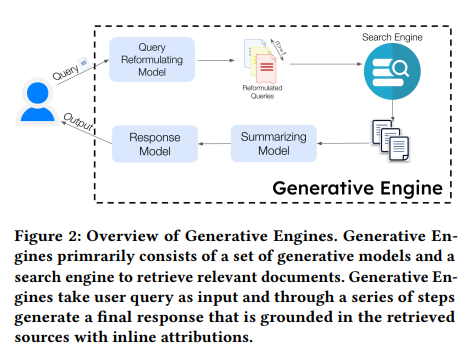
Generative Engine Optimization (GEO) is an optimization framework designed for generative search engines, not just traditional search engine result pages. In this model, the goal is not only to rank, but also to become a source that AI systems are more likely to use, cite, and summarize.
That makes GEO especially relevant for writers, marketers, publishers, and website owners who want better visibility in AI-generated answers. It also shifts attention away from keyword-heavy tactics and toward evidence, structure, and credibility.
Why SEO Is Not Enough
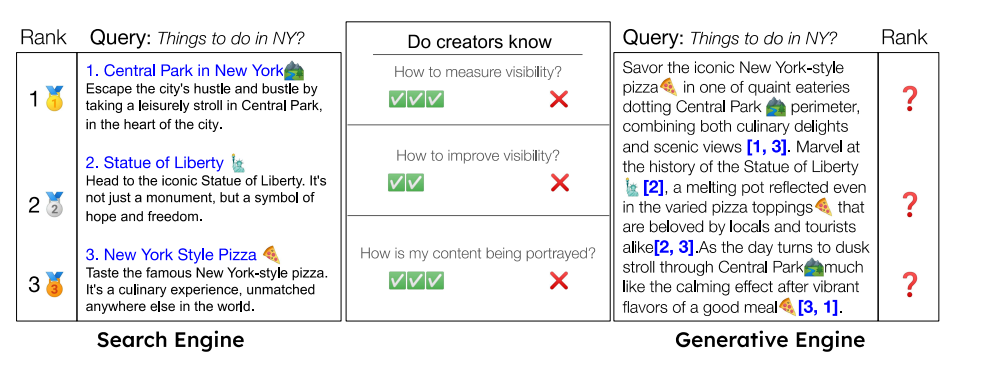
Traditional SEO was built around search engine rankings, but generative engines work differently because they produce synthesized answers with inline citations. The paper argues that this creates a new visibility challenge, since being well-optimized for Google does not automatically mean being visible in AI answers.
This is why the study presents GEO as a distinct framework rather than a small extension of SEO. For content teams, the practical lesson is simple: content must be useful not only for humans and crawlers, but also for AI systems that select and cite sources.
Best GEO Tactics
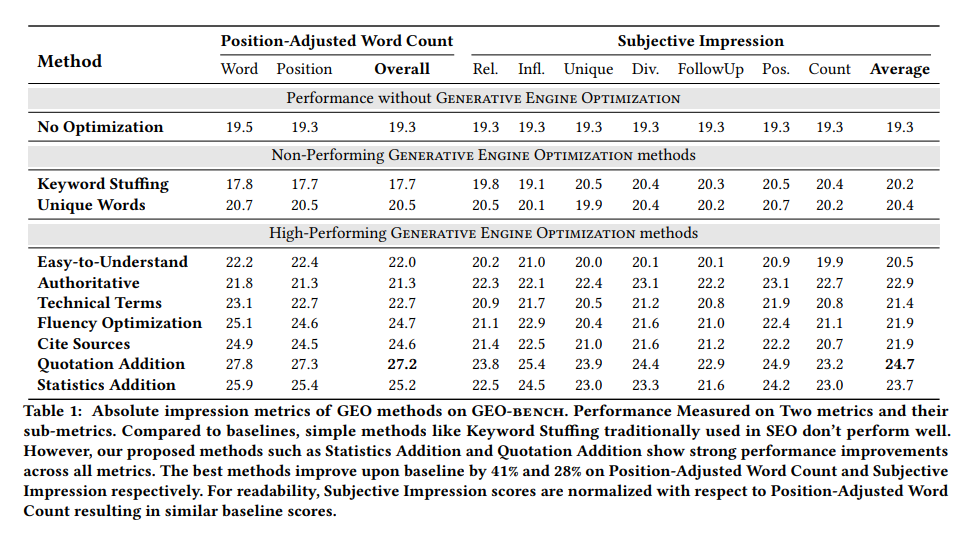
The study found that the strongest content strategies for GEO are adding quotations, statistics, and credible citations. These changes matter because they make content look more trustworthy and more useful to generative engines.
Useful GEO-friendly edits include:
Add direct quotations from reliable sources.
Include statistics where they genuinely support the topic.
Cite credible sources clearly and naturally.
Keep the writing readable and structured so AI systems can extract it more easily.
At the same time, keyword stuffing performs poorly for generative engines. That means the old habit of repeating phrases too often is not a good strategy for AI search optimization.
Key Evidence From GEO-bench
The paper introduces GEO-bench, a benchmark built with 10,000 queries across 25 domains. It uses a two-step generative engine pipeline that retrieves the top 5 Google sources and then generates cited answers with GPT-3.5-turbo.
The benchmark evaluates 9 GEO methods and also tests selected methods on Perplexity.ai. This matters because it gives the study both a research setting and a real-world generative engine setting.
The results show that GEO methods outperform no optimization overall. The paper also reports visibility gains up to 40%, with some measures improving by up to 41% and 28%.
What The Metrics Show
The study uses metrics built for generative engines, including Position-Adjusted Word Count, Subjective Impression, and visibility-related measures. These metrics help show not only whether a source appears, but also how strongly it is represented in the generated answer.
The paper reports that the best GEO methods improve Position-Adjusted Word Count by up to 41% and Subjective Impression by up to 28% on GEO-bench. On Perplexity.ai, the best-performing methods improve Position-Adjusted Word Count by 22% and Subjective Impression by 37%.
For low-ranked websites, CiteSources increased visibility for rank-5 pages by 115.1% on average in one analysis. That suggests GEO may help smaller websites gain exposure that is harder to achieve through traditional SERP-focused SEO alone.
What It Means For Marketers
For marketers and publishers, GEO changes the content strategy focus from rank-first to answer-first. The paper suggests that content teams should emphasize credibility, evidence, readability, and structured support rather than relying on keyword-heavy tactics.
In practical terms, that means:
Writing content that directly answers common questions.
Supporting claims with citations and statistics.
Using quotations where they add authority.
Avoiding artificial keyword repetition.
This approach is especially useful for AI search optimization, generative search SEO, and Perplexity SEO because those environments reward content that can be trusted and summarized cleanly.
Practical Takeaways
If you want to apply GEO today, start with the parts the study supports most clearly. Improve your content’s evidence quality before worrying about keyword density.
A simple GEO workflow would be:
Identify a topic that users ask in AI search tools.
Add credible citations and relevant statistics.
Include quotations where they improve clarity or authority.
Organize the page with clear sections and direct answers.
Avoid keyword stuffing and overly repetitive phrasing.
This does not guarantee visibility, but it aligns your content with the methods the paper found to be more effective in generative engines.
Conclusion
Generative Engine Optimization (GEO) is a practical response to the rise of AI-generated search answers. The study shows that classical SEO is not enough by itself, and that content supported by quotations, statistics, and credible citations is more likely to perform well in generative engines.
For anyone working in SEO, content marketing, or publishing, GEO offers a clearer path to AI citation visibility. The main message is straightforward: if you want your content to appear in AI answers, make it stronger, clearer, and more evidence-based.
FAQ Section
1. What is Generative Engine Optimization?
Generative Engine Optimization (GEO) is a framework for improving content visibility in AI-generated search answers rather than only in traditional search rankings.
2. How is GEO different from traditional SEO?
Traditional SEO focuses on ranking pages in search engine results, while GEO focuses on being selected, cited, and summarized inside generative answers.
3. Which content changes help websites appear more in AI answers?
The paper highlights quotations, statistics, and credible citations as the strongest content changes for GEO.
4. Why do statistics and citations matter in GEO?
They help content appear more credible and useful to generative engines, which can improve visibility in AI-generated responses.
5. Can small websites benefit from GEO?
Yes. The study reports that CiteSources improved visibility for rank-5 pages by 115.1% on average in one analysis, suggesting lower-ranked sites can gain exposure.
Reference
Aggarwal, P., et al. (2024). GEO: Generative Engine Optimization. In Proceedings of the ACM SIGKDD Conference (KDD ’24).
Choosing an SEO outsourcing company is mainly a decision about fit, control, and evidence. Before signing, confirm what the provider will deliver, what it will…