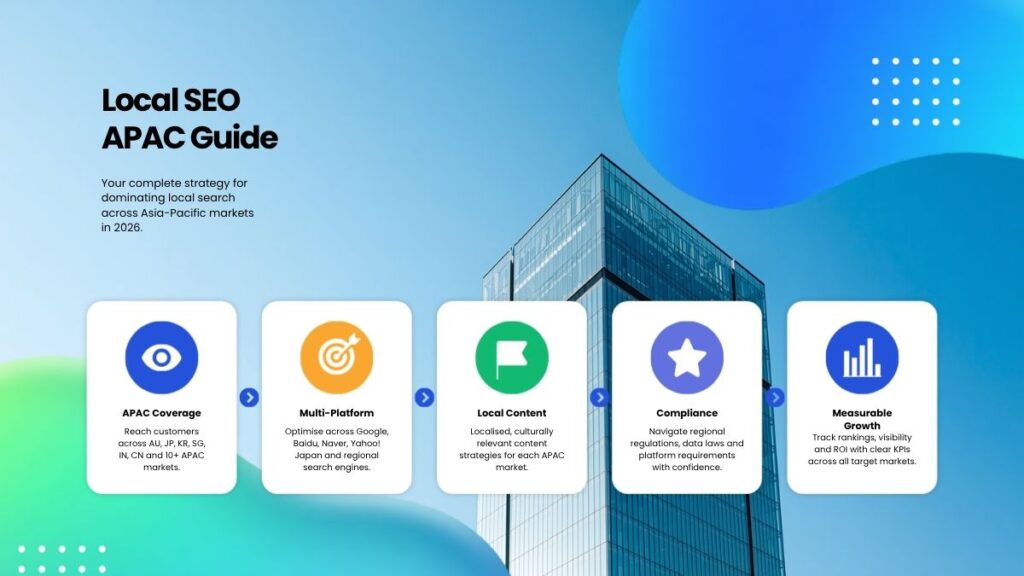
Local SEO Asia helps regional brands, agencies, and local businesses improve map visibility, local rankings, and lead generation across Asian markets. When local search is done well, it connects the right business to the right customer in the right city, country, or language.
For many businesses, the challenge is not whether local SEO matters. The challenge is whether your team can adapt fast enough to different cities, languages, and local search behaviors across Asia.
Why local SEO matters in Asia
Local SEO matters across Asia because search intent is highly regional. Buyers often search with a city, country, or language in mind, and they expect results that feel local and trustworthy.
That means a generic website is rarely enough. Businesses need market-specific visibility, strong local signals, and a clear structure that helps both users and search engines understand where the business operates.
Why regional visibility is different across Asia
Asia is not one market. It is many markets with different expectations, languages, and discovery habits. Some users search primarily on Google Maps. Others rely on Google Search, local directories, or mobile-first browsing.
This is why local SEO Asia needs more than basic keyword targeting. It needs local business information, structured pages, and region-aware content.
Where local rankings create real business value
Local rankings matter most when a business depends on nearby customers, local trust, or fast purchase decisions. That includes service businesses, regional brands, SEO , and multi-location companies.
A strong local SEO strategy supports:
Local leads.
Map visibility.
Organic traffic.
Regional authority.
Better conversion growth.
How local search differs across Asian markets
Local search behavior changes across countries and cities. Language, mobile habits, trust signals, and local competition all affect how a business appears in search.
That is why local SEO Asia should be built as a regional system, not a single page or one-off campaign.
Country-level differences
Some markets are more Google-centric. Others rely more heavily on maps, local listings, or mobile search experiences. In each case, search intent and conversion behavior may differ.
This means businesses need country-specific targeting, not just one regional landing page.
City-level and language-level differences
City searches often have stronger purchase intent. A user searching for a service in Singapore, Jakarta, Bangkok, or Kuala Lumpur is usually closer to action than a user searching broadly across Asia.
Language adds another layer. Multilingual markets need keyword research, content, and trust signals that fit the local language and decision-making style.
Local SEO services we offer
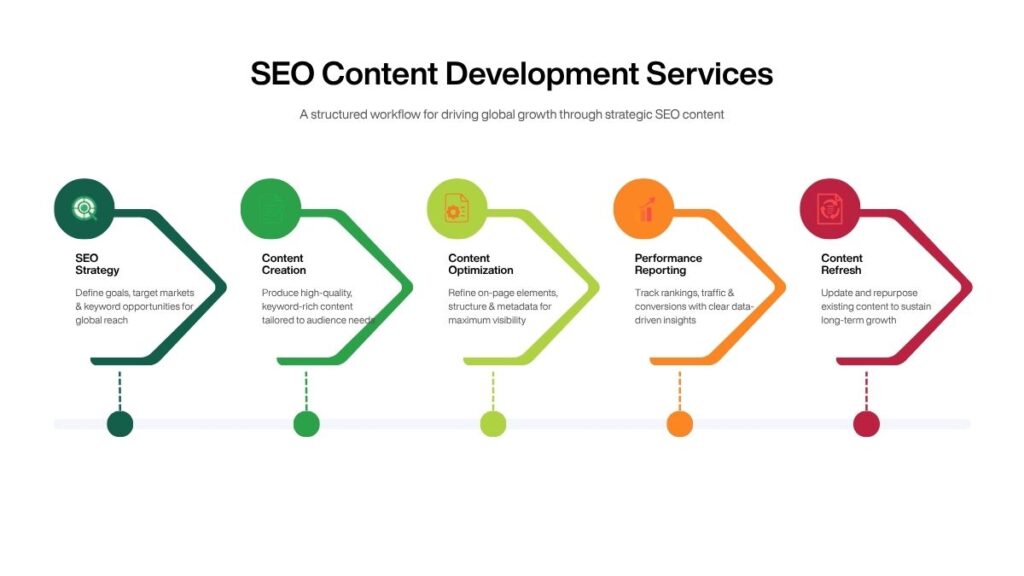
Local SEO services in Asia should cover both strategy and execution. Businesses need a partner that can diagnose visibility gaps, improve local rankings, and maintain performance over time.
SEOSERVICES1’s local SEO support is built around practical, regional delivery.
Strategy and audits
A good starting point is an SEO audit. This helps identify technical issues, local content gaps, missing profile details, and city-level opportunities.
Optimization and ongoing support
Ongoing local SEO usually includes:
Google Business Profile support.
Location page optimization.
Local keyword mapping.
Internal linking.
Review and trust signal support.
Reporting and ongoing adjustments.
Local SEO delivery model
Service Area
What It Supports
Why It Matters
SEO audit
Diagnostic review
Reveals visibility gaps
Google Business Profile
Map presence
Improves local discovery
Location pages
Country/city targeting
Increases local relevance
Multilingual SEO
Cross-language visibility
Expands regional reach
Reporting
Performance tracking
Supports transparency
Google Business Profile and map visibility
Google Business Profile is one of the most important parts of local SEO Asia. It influences how a business appears in map results, local packs, and location-based searches.
Google’s local ranking guidance says relevance, distance, and prominence are the main factors that shape local visibility. That makes profile completeness, business accuracy, and trust signals essential.
Accurate business name, address, and phone details.
Updated hours.
Service areas.
Business categories.
Photos.
Reviews and responses.
These signals help search engines and users trust the listing.
Map pack visibility and local rankings
Map pack SEO Asia is important for businesses that need quick discovery. When a user searches for a service in a specific city, the map pack can drive immediate leads.
That is why profile quality, local relevance, and review management should be part of every regional SEO plan.
Country-specific and city-specific SEO
Country-specific and city-specific SEO help businesses turn Asia-wide visibility into market-level growth. Instead of relying on one broad regional page, the site should use localized pages that match search intent in each market.
Country pages
Country pages should explain:
Which market is being targeted.
What services are available there.
Why the business is relevant locally.
What proof or trust signals support the market.
City pages and market packs
City pages are useful when the business serves local buyers in a specific area. They work best when supported by location-specific details, local terms, and strong internal linking.
Country packs and city packs make the site feel more useful and more relevant to users in each market.
Multilingual local SEO
Multilingual local SEO is essential for many Asian markets. A brand may need to rank in more than one language while still keeping the same message, structure, and conversion flow.
That requires more than translation. It requires localization, transcreation, and market-specific keyword research.
Native keyword research
Native keyword research helps identify how people actually search in each language. Direct translation often misses intent, tone, and local phrasing.
Multilingual SEO improves relevance because it aligns the content with the market’s language and search behavior. It also increases trust, because users are more likely to engage with content that feels native to them.
Semantic SEO and entity optimization
Semantic SEO helps search engines understand the meaning of your content, not just the keywords. In local SEO Asia, that means connecting the right entities across local markets, services, and trust signals.
A strong local SEO page should connect related ideas:
Local visibility.
Map rankings.
Organic traffic.
Local leads.
Website optimization.
Technical SEO.
On-page SEO.
Content SEO.
This builds topical authority and helps the page support more search queries over time.
GEO optimization
GEO optimization is the part of local SEO that makes the offer feel real in a specific location. In Asia, this is especially important because buyers want proof that the service works in their country or city.
Location targeting
The site should support a clear structure for:
Country pages.
City pages.
Regional pages.
Market packs.
Local trust and conversion signals
Strong GEO pages should include:
Local proof.
Market-specific CTAs.
Local reviews.
Business hours.
Service area details.
Location-based messaging.
This approach improves both relevance and conversion.
AI visibility optimization
AI visibility is now part of local SEO because users often see AI-generated summaries or answer-style results before they click. That means the page should be easy for AI systems to scan, summarize, and cite.
Google AI Overviews and answer engines
Users increasingly discover businesses through Google AI Overviews, ChatGPT-style results, and other answer engines. That changes how local SEO content should be written.
AI citation visibility and snippet readiness
To improve AI visibility:
Use short, direct paragraphs.
Add clear headings.
Answer questions early.
Keep business facts specific.
Include trust signals.
Use FAQ sections.
Industry research continues to show that generative search is changing how users interact with SEO content, which increases the importance of structured, answer-first pages.
Website structure and internal linking
Website structure plays a major role in local SEO Asia. A clear architecture helps search engines understand which page belongs to which market and service.
Architecture for regional sites
The best regional sites use:
Clear country folders or pages.
City-specific landing pages.
Localized navigation.
Consistent naming conventions.
Internal linking for local rankings
Internal links help reinforce the relationship between:
The main regional page.
Country and city pages.
Service pages.
Content and insight pages.
Use internal links to support both users and search engines. For example, SEOSERVICES1 can connect this page to its homepage, SEO audit, and insights pages.
SEO audit process
An SEO audit is usually the best first step for local SEO Asia because it shows what is working, what is missing, and where the biggest gains are available.
Audit scope
A useful audit should review:
Local ranking signals.
Google Business Profile health.
Technical SEO issues.
Content gaps.
Location page structure.
Internal linking.
Local keyword targeting.
Prioritization and implementation
After the audit, the next step is to prioritize changes by impact. Some issues affect visibility immediately. Others support long-term regional authority.
SEOSERVICES1’s SEO audit is the best entry point for this process.
Reporting and performance tracking
Reporting is essential because businesses need to know whether local SEO is driving visibility and leads.
Google Analytics and Search Console
Use Google Analytics and Google Search Console to track:
Good local SEO reporting should be regular, easy to read, and tied to business outcomes.
A strong report should show:
What changed.
What improved.
What needs attention.
What the next actions are.
This keeps the relationship transparent and practical.
Why choose SEOSERVICES1
SEOSERVICES1 is built for businesses that need local SEO Asia support with regional understanding and delivery clarity. The offer is designed to help agencies, local businesses, and regional brands grow with confidence.
Regional understanding
SEOSERVICES1 understands that Asia-wide local SEO is not one-size-fits-all. Different cities and countries need different content, local signals, and trust patterns.
Transparency and accuracy
Trust matters in local SEO. Buyers want clear scope, clear reporting, and accurate execution. That is why the process should always be visible and easy to follow.
Different buyers need different support levels. Some need a one-time audit. Others need ongoing retainer support. Some need help with a specific market or city.
Retainers
Retainers are ideal for ongoing visibility, reporting, and local growth.
Project-based support
Project support works well for:
Profile cleanups.
City page launches.
Market-specific localization.
Audit implementation.
This flexibility makes it easier to match the service to the business need.
FAQ
What is local SEO Asia?
Local SEO Asia is the process of improving local search visibility for businesses across Asian markets. It focuses on local rankings, map visibility, country targeting, and multilingual local SEO.
Why is local SEO important across Asian markets?
Local SEO is important across Asian markets because search intent varies by city, country, and language. Businesses need localized visibility to attract nearby customers and generate leads.
Can multilingual SEO improve local rankings?
Yes. Multilingual SEO can improve local rankings by matching the language, keywords, and content style of each market more closely.
How long does local SEO take to show results?
Local SEO timelines vary by market and competition. Some changes can improve visibility quickly, while stronger ranking growth usually takes consistent work over time.
What is included in technical local SEO?
Technical local SEO may include site audits, indexing checks, internal linking, location page structure, mobile performance, and Google Business Profile support.
Why choose SEOSERVICES1?
SEOSERVICES1 offers Asia-focused local SEO with audit-led onboarding, regional understanding, transparent reporting, and support for multilingual and city-specific visibility.
Conclusion
Local SEO Asia is one of the most practical ways to drive visibility, local leads, and regional growth across Asian markets. When the strategy is built around local relevance, multilingual execution, and a clear audit-led process, it becomes much easier to win trust and convert visitors.
For SEO agency APAC, local businesses, and regional brands, the goal is not just to rank. It is to be found, trusted, and chosen in each market. You can try our SEO outsourcing APAC for 1st time or take a look for SEO Packages Asia.
Senior Search Strategist specializing in SEO, AEO, and Generative Engine Optimization (GEO). With over a decade of experience, Rick helps brands and applications (ASO) maximize their visibility across traditional search engines, AI answer engines, and app stores.