SEO services in Germany are professional digital marketing strategies designed to improve a website’s visibility on search engines like Google. These services typically include technical optimization, local keyword targeting, content creation, and link building to drive measurable organic traffic and leads.
Here is what German business owners face in 2026. You have worked with agencies that promise top rankings but cannot walk you through their actual strategy step by step. You have seen quotes ranging from €500 to €20,000+ per month, leaving you uncertain about which price point is legitimate and which might be a trap. You want to know exactly how many euros you are committing to, what tangible deliverables you receive in exchange, and when you will start seeing paying customers instead of just watching website analytics count visits. This guide delivers that clarity. We break down actual SEO costs in Germany for 2026 using verified market data, compare transparent package tiers with real EUR numbers you can build into your budget, explain the critical difference between ranking for “Berlin” versus “Germany-wide” (because choosing the wrong geographic strategy wastes thousands of euros), and show you why AI-SEO has become absolutely essential for surviving Google’s AI Overviews in the coming months.
What Are SEO Services in Germany?
SEO services in Germany are professional digital marketing strategies designed to improve a website’s visibility on search engines like Google. These services typically include technical optimization, local keyword targeting, content creation, and link building to drive measurable organic traffic and leads.
Let us be practical about what this means for your business operations. If you run a dental practice in Berlin-Mitte, a law firm in Munich, or an e-commerce store shipping from Berlin to Hamburg and Frankfurt, “visibility” is not your end goal—revenue is. You need to show up when customers actively search for “plumber in Berlin” or “SEO agency Germany” with clear intent to purchase right now. That is the genuine power of SEO. It puts your business in front of people who are already looking for you, not just people scrolling through social media hoping to notice your ad.
How SEO Services Drive Business Growth in Germany
The primary goal of SEO services in Germany is to put your business in front of customers at the exact moment they search for your product or service. Unlike paid ads (PPC), which stop working the instant you stop paying, SEO builds a long-term asset that compounds over time and keeps working even when you are not actively managing campaigns.
Consider this scenario. A dental clinic in Berlin invests €3,000/month in Google Ads. The day they cancel that budget, patient appointments stop flowing. Now imagine that same clinic invests in SEO instead. They build a steady, predictable stream of organic traffic that continues flowing even on weekends when they are not actively managing campaigns. This is the fundamental difference between renting traffic (PPC) and owning it (SEO). Over 3–5 years, SEO almost always outperforms PPC on ROI, even though it takes longer to build initial momentum.
The data confirms this repeatedly. According to SeoProfy’s 2025 SEO Statistics, 65% of people who search on Google click on organic search results, with 91% of marketers reporting positive impact from SEO on website performance. SEO, when executed properly using white-hat techniques, is a genuine business growth engine, not just a marketing checkbox to tick off your list.
The Components of SEO Services in Germany
A complete SEO service package in Germany includes four core pillars working together as an interconnected system. Missing even one weakens the entire strategy and leaves you vulnerable to competitors who have all four components in place:
- Technical SEO: Optimizing site speed, mobile responsiveness, and site architecture so Google can crawl and index your pages efficiently. If Google cannot access your site properly, nothing else matters—not your content, not your keywords. German internet users increasingly access sites via mobile devices, making mobile optimization especially critical in this market.
- On-Page SEO: Optimizing meta tags, headers, and content with relevant keywords (e.g., “Berlin,” “Germany”) to signal relevance to search engines. This tells Google exactly what your page is about and which geographic audience should see it.
- Content Strategy: Creating high-quality blog posts, service pages, and landing pages that answer user questions and demonstrate expertise. Content convinces visitors to become customers by addressing their pain points and showing you understand their specific needs.
- Off-Page SEO (Link Building): Acquiring high-quality backlinks from reputable German and international websites to increase domain authority. Backlinks function like votes of confidence from other sites; the more authoritative the voting site, the more weight your vote carries in Google’s algorithm.
Without all four working together in harmony, you leave money on the table. Technical SEO without content is like a showroom with no products—great infrastructure, nothing to sell. Content without link building is like a billboard in the middle of a desert—great message, no one sees it. You need both the foundation and the authority to rank consistently.
Mobile-First Reality: With 65% of searches on mobile devices in Germany (2025), mobile optimization is non-negotiable. If your site is not mobile-friendly, you are literally losing two-thirds of your potential customers before they even see your content.
2026 SEO Pricing & Packages in Germany (EUR)
The number one question German business owners ask before hiring an agency is brutally simple: “How much does SEO cost?” The frustration is real and widespread because answers vary wildly across the market. Some agencies quote €500 per month (which should raise immediate red flags about quality). Others demand €20,000+ (which may be overkill for most SMEs). When the price range spans 40x, it is impossible to know who charges fairly and who is overcharging or underdelivering.
The honest, data-backed answer is this: In 2026, the average cost of SEO services in Germany ranges from €500 to €20,000+ per month, with realistic budgets for SMEs starting at €500 and enterprise campaigns reaching €5,000–€20,000+ monthly.
Average Market Rates for SMEs & Enterprises
Pricing in Germany is not one-size-fits-all, and for good reason. It depends heavily on your business goals, industry competition level, your website’s current technical state, and your geographic target. A neighborhood coffee shop in Berlin-Mitte needs a completely different strategy than a national e-commerce store selling fashion across all Germany. Scope of work determines price, and that is intentional—custom pricing reflects custom strategy.
| Business Type | Target Reach | Monthly Retainer (EUR) |
|---|---|---|
| Micro / Local SME | Single City (e.g., Berlin) | €500 – €1,500 |
| Professional / Growing SME | National (Germany-wide) | €1,500 – €4,000 |
| Enterprise / E-commerce | National + International | €5,000 – €20,000+ |
Source: GoldenWing 2026, AOVS 2026 industry benchmarks
GoldenWing’s 2026 analysis shows SEO pricing in Germany ranges from the dangerous “€500/month, #1 ranking guaranteed” (a massive red flag for spammy tactics that will get your site penalized) up to “€20,000+/month for Enterprise” campaigns competing in ultra-competitive international markets. AOVS’s 2026 data validates this pricing structure: small businesses invest €500–€4,000/month, mid-sized businesses €1,500–€4,000/month, and enterprises €5,000–€20,000+/month.
Package Breakdown: Starter, Growth, & Ultimate
Transparency used to be rare in the German SEO industry, but that is finally changing as business owners demand more clarity. Below is what a typical professional package in Germany looks like in 2026.
Starter Package (SME / Local)
Target: Small businesses in specific cities like Berlin, Munich, or Hamburg.
- Price: €500 – €1,500 / month
- Keywords: Up to 10 keywords
- Optimization: On-page optimization for 5 pages
- Content: 1 blog post per month
- Backlinks: 5–10 quality backlinks per month
- Reporting: Monthly performance report
- Best For: Local Berlin businesses, clinics, restaurants, retail shops
Growth Package (Growth / National)
Target: Growing SMEs competing nationally across Germany.
- Price: €1,500 – €4,000 / month
- Keywords: Up to 30 keywords
- Optimization: On-page optimization for 20 pages + Technical SEO
- Content: 2–4 blog posts per month
- Backlinks: 15–25 quality backlinks per month
- Reporting: Detailed monthly report with conversion tracking
- AI-SEO: Basic optimization for AI Overviews included
- Best For: E-commerce, SaaS, national brands, multi-location businesses
Ultimate Package (Enterprise / Multi-Location)
Target: Large enterprises and multi-location brands with complex needs.
- Price: €5,000 – €20,000+ / month
- Keywords: 50+ keywords (including highly competitive head terms)
- Optimization: Full site audit, unlimited on-page optimization
- Content: 8+ articles per month + Landing pages
- Backlinks: 40+ high-authority backlinks (Digital PR campaigns)
- Reporting: Real-time dashboard + Quarterly strategy calls
- AI-SEO: Advanced Generative Engine Optimization (GEO) included
- Best For: Enterprise, multi-location franchises, international brands operating in Germany
Local SEO (Berlin) vs. National SEO (Germany-wide)
The biggest and most expensive mistake German businesses make is treating Local SEO and National SEO as if they are the same thing. If you are a restaurant in Berlin serving walk-in customers, optimizing for “Germany” wastes your entire budget. You want customers within 5–10 kilometers who can physically walk through your door or call for delivery. On the other hand, if you are an e-commerce store shipping nationwide from Berlin to Munich to Hamburg, focusing only on “Berlin” severely limits your growth potential and leaves serious money on the table.
Local SEO targets specific cities like Berlin, Munich, or Hamburg and relies heavily on Google Business Profile optimization. National SEO targets country-wide keywords and requires more aggressive content creation and link-building strategies to compete across all Germany.
Why Berlin Businesses Need Google Business Profile (GBP)
If your business has a physical location—a dental clinic in Berlin-Mitte, a law firm in Munich, or a restaurant in Kreuzberg—Local SEO is non-negotiable. Google prioritizes your Google Business Profile (GBP) for local searches, putting you in the “Local Pack” (the map results with the three top businesses showing ratings, photos, and contact info) right above regular organic results. This is prime digital real estate for Berlin businesses, and most customers never scroll past it.
According to SeoProfy, 70% of people are more likely to visit a business with a complete Google Business Profile, and 72% of people turn to Google when looking for local businesses or services. This means GBP optimization is absolutely critical for Berlin businesses targeting local customers.
| Feature | Local SEO (Berlin) | National SEO (Germany-wide) |
|---|---|---|
| Target Audience | Customers in specific city/area | Customers across all Germany |
| Key Tactic | Google Business Profile Optimization | Broad Keyword Strategy + Content |
| Primary Goal | Appear in Google Maps “Local Pack” | Rank #1 in Organic Search Results |
| Keywords | “Service + City” (e.g., “SEO Berlin”) | “Service + Country” (e.g., “SEO Germany”) |
| Time to ROI | 3–6 months (faster, less competitive) | 6–12 months (slower, more competitive) |
| Best For | Clinics, Restaurants, Contractors, Retail | E-commerce, SaaS, National Brands |
Local SEO Tactics for Berlin
- Google Business Profile (GBP): Claim and verify your listing immediately. Ensure your Name, Address, and Phone number (NAP) are consistent across your website, GBP, and all other directories. Inconsistency confuses Google and hurts your rankings significantly. Add photos, business hours, and respond to reviews regularly to build trust.
- Local Keywords: Optimize for “best [service] in Berlin” or “[service] Germany” with city/district names. Include Berlin district names (Mitte, Kreuzberg, Prenzlauer Berg, Charlottenburg, Friedrichshain) in your page titles, meta descriptions, and content to capture hyper-local searches from people in your immediate area.
- Local Citations: Get listed in German directories and local business chambers. These citations build local authority in Berlin and other German cities like Munich, Hamburg, and Frankfurt, signaling to Google that you are a legitimate local business.
National SEO Tactics for Germany
- E-commerce Optimization: Optimize thousands of product pages for search intent. This includes category pages, product descriptions, filtering structures, and user reviews. Each product page is a potential entry point for organic traffic from customers across the country.
- Content Marketing: Create authoritative content covering your industry’s entire scope for all Germany. Think about what questions your customers nationwide are asking, and answer them comprehensively to establish yourself as the go-to expert.
- High-Authority Link Building: Acquire links from major German news sites and industry leaders. These links carry far more weight than local directory links and establish your brand as a national authority in your field.
Our Transparent 30-Day SEO Onboarding Process
One of the biggest frustrations business owners have with German agencies is the “black box” effect that breeds distrust. You pay on the first of the month, but you do not know what they are actually doing during that first month. Are they even working on your site? What progress are they making? You are left wondering if anything is happening at all. SEOSERVICES1 eliminates this anxiety completely by providing a transparent 30-day onboarding roadmap showing exactly what happens week by week, with clear deliverables and checkpoints you can track.
Week 1: Technical Audit & Competitor Baseline
We start by deep-diving into your website infrastructure with surgical precision. We run a comprehensive technical audit to identify errors holding you back—broken links frustrating users and hurting rankings, slow page speeds increasing bounce rates (especially critical for German mobile users on varying connections), or missing meta tags hurting click-through rates from search results. Simultaneously, we analyze your top 5 competitors in Germany to see what keywords they rank for, what content they publish, and where their backlinks come from. This gives us a concrete baseline to beat and a roadmap for outranking them systematically.
Deliverable: Full technical audit report with prioritized fixes (critical, high, medium priority) and competitor baseline document showing their top 50 keywords and traffic sources.
Week 2: Keyword Strategy & AI-SEO Planning
Based on audit findings, we build your keyword strategy with precision. We do not pick random high-volume words; we pick keywords with commercial intent—terms indicating someone is ready to buy, not just browsing for information. For example, targeting “SEO services Germany” is good for branding, but targeting “hire SEO agency Berlin” is better for conversions because those users are ready to buy now with higher purchase intent.
We also begin mapping your content for Generative Engine Optimization (GEO), ensuring your site is structured to be cited by AI tools like ChatGPT, Google’s AI Overviews, and Perplexity. This is critical for 2026 and beyond as AI search becomes the dominant way younger generations find information.
Deliverable: Keyword map with search volume, difficulty score, and commercial intent rating, plus a 90-day content calendar aligned with business goals.
Week 3-4: On-Page Execution & Content Calendar
This is the execution phase where visible changes start happening. We optimize existing pages—updating title tags, meta descriptions, headers, image alt text, and internal links according to best practices. We also begin publishing new, high-quality content answering your customers’ questions and demonstrating your expertise in your field. This is not filler content; it is strategic content designed to rank and convert visitors into paying customers.
Deliverable: First batch of optimized pages live and initial content published, with analytics tracking configured to measure performance from day one.
Ongoing Month 2+: Growth & Link Building
SEO is a marathon, not a sprint, and the real magic happens after month 1. Months 2 and beyond focus on building authority through strategic link building (acquiring links from authoritative German and international sites) and refining your content strategy based on actual performance data. We track what works, double down on it, and abandon what does not. This iterative process drives continuous improvement and compounding results over time.
According to SeoProfy, links impact ranking after 3.1 months on average. This means you should expect initial ranking movements within 60-90 days, but sustainable ROI and significant traffic growth usually take 6-12 months (compounding gains, authority building).
Why Your Brand Needs AI-SEO (Generative Engine Optimization)
Google is fundamentally changing how search works, and the shift is happening faster than most German business owners realize. In 2026, Google AI Overviews appear for an increasing number of queries, answering questions directly in search results before users even see traditional “blue links.” If your content is not optimized for this new reality, you are effectively invisible to AI-powered search, which is becoming the preferred search method for younger generations.
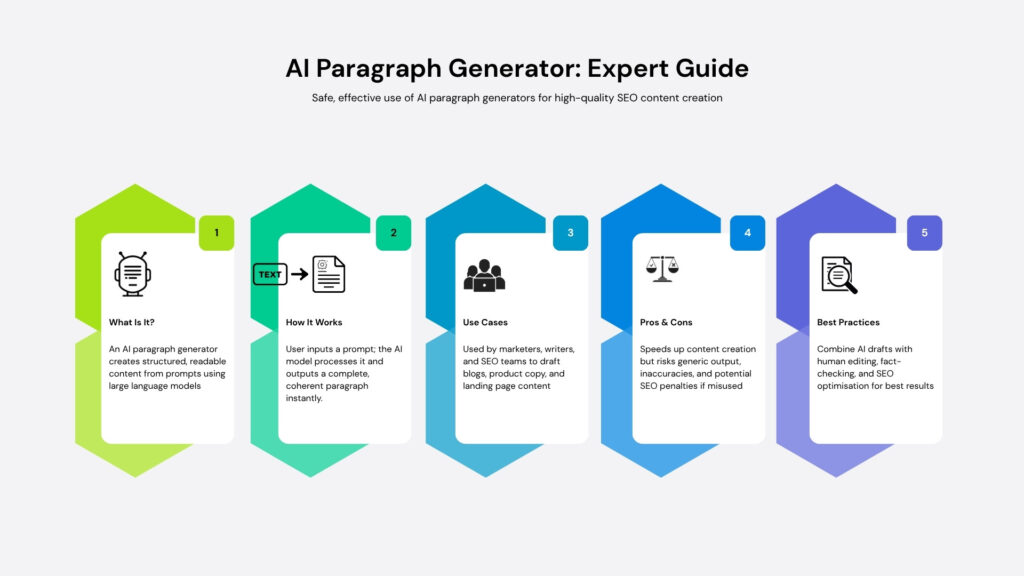
AI-SEO, or Generative Engine Optimization (GEO), is the process of optimizing website content to be cited and recommended by artificial intelligence platforms like ChatGPT, Google’s AI Overviews, and Perplexity.
Traditional SEO optimizes for “10 blue links” on a results page. AI-SEO optimizes for “correct answers” that AI models will quote and recommend to users. If your content is not structured to be easily read and understood by AI bots (using clear, factual language, direct answers in the first paragraph, structured data with schema markup, and comprehensive topic coverage), it will not be recommended by AI.
According to SeoProfy, 67% of small businesses use AI to improve their content and SEO. This means AI-SEO is no longer optional—it is essential for survival in 2026. The search landscape is shifting rapidly toward AI responses, and businesses ignoring this shift will lose visibility permanently.
Image Description: AI-SEO and Generative Engine Optimization strategies for Germany in 2026, optimizing for Google AI Overviews and ChatGPT recommendations.
SEO vs. Google Ads for German Businesses
| Factor | SEO | Google Ads |
|---|---|---|
| Payment Model | Monthly retainer (no per-click fee) | Pay-per-click (PPC) |
| Traffic Duration | Lasts as long as you maintain rankings | Stops when you stop paying |
| Best For | Long-term sustainable growth | Immediate results (launches, promotions) |
| ROI Timeline | 6–12 months sustainable | Instant (days) |
| Cost Control | Fixed monthly retainer | Budget varies by competition |
| Long-term Value | Builds durable asset | No residual value |
Real German SEO Case Studies: Traffic & Revenue Results
Proof is essential when choosing an SEO agency. Here are real case studies showing actual traffic and revenue growth for German and international businesses targeting the German market.
Case Study 1: HVSEO Client (SaaS Brand)
- Client: US-based SaaS brand expanding to Germany
- Challenge: Low visibility in German market despite quality product
- Strategy: German-language keyword research, hreflang implementation, localized content
- Results:15x increase in keyword positions 4-10, 620% increase in organic traffic, 300% increase in website sales
Case Study 2: HVSEO Client (Germany-based Company)
- Client: Germany-based company with international ambitions
- Challenge: Limited traffic from outside Germany
- Strategy: Full international SEO framework, hreflang pages, multilingual content
- Results: Traffic from US, UK, and Australia increased significantly
Case Study 3: German E-commerce Store
- Client: E-commerce store selling fashion across Germany
- Challenge: Stagnant organic traffic despite frequent product updates
- Strategy: Technical SEO audit, product page optimization, content strategy
- Results:40% increase in organic traffic within 6 months
Case Study 4: Berlin Restaurant
- Client: Restaurant in Berlin-Mitte serving walk-in customers
- Challenge: Low visibility for local searches
- Strategy: Google Business Profile optimization, local keyword targeting, local citations
- Results:45% increase in customer visits through Local SEO
Getting Started with SEOSERVICES1 in Germany
If you are ready to outrank competitors in Berlin and across Germany, the first step is a clear, honest audit of your current situation—no sugar-coating, no sales pitch.
We offer a free website audit for German businesses evaluating SEO options. This is not a sales pitch disguised as free advice with vague recommendations. It is a real, actionable roadmap showing exactly why you are not ranking higher now, what specific technical errors hold you back, and what specific steps you need to fix it. Whether you are a local SME in Berlin looking for affordable Starter packages or a national brand needing enterprise-level Ultimate packages, we have the proven strategy and transparent pricing to help you grow.
Visit SEOSERVICES1 to start your journey with transparent, data-driven SEO services in Germany.
FAQ: SEO Services Germany
Do you guarantee 1st-page rankings on Google?
No ethical agency can guarantee a #1 ranking because Google’s algorithm is proprietary and constantly changing. However, legitimate agencies offer performance guarantees based on measurable KPIs like traffic growth, lead generation, or ranking improvements for specific keywords. Avoid any agency promising “Guaranteed #1 Ranking in 7 Days”—this is a massive red flag for spammy, black-hat tactics that can get your site penalized or deindexed by Google, destroying your online business for years.
What is the average cost of SEO services in Germany?
SEO services in Germany cost €500–€20,000+ per month in 2026, with local SEO €500–€1,500/month, national SEO €1,500–€4,000/month, and enterprise SEO €5,000–€20,000+/month.
Are there any hidden setup fees?
Reputable agencies in Germany disclose all costs upfront with no surprises. Avoid suspiciously low monthly retainers (e.g., €500) paired with massive “setup fees” (e.g., €5,000)—this is often a pricing trap designed to lock you in. Always ask for a full itemized breakdown of all costs (monthly retainer, setup fees, tool costs, content costs) before signing a contract.
Do I own the content if I cancel my retainer?
Yes, you should. Best practice in Germany is that you own all content (blog posts, landing pages, optimized pages) created for you as part of your contract. Ensure your contract explicitly states you retain full ownership of all digital assets created during the engagement, including content, code, and data.
How long does it take to see SEO results in Germany?
You’ll typically see initial ranking movements within 60-90 days (small improvements, new indexing), but sustainable ROI and significant traffic growth usually take 6-12 months (compounding gains, authority building). Be skeptical of agencies promising “fast results” in weeks, as these often indicate risky black-hat tactics leading to penalties later.
Is Local SEO different from National SEO?
Yes, significantly. Local SEO targets specific cities (Berlin, Munich, Hamburg) and relies heavily on Google Business Profile optimization, local citations, and “near me” keyword targeting. National SEO targets country-wide keywords and requires more aggressive content creation, technical optimization, and link-building strategies to compete across all Germany against established national brands.
What’s the difference between SEO and Google Ads?
SEO is organic. You do not pay per click, and traffic lasts as long as you maintain rankings and content quality (even after stopping agency payments). Google Ads is paid advertising where you pay every time someone clicks your ad, and traffic stops instantly when you stop paying. SEO is better for long-term sustainable growth and building a durable asset. Ads are better for immediate results when you need traffic today (product launches, promotions, testing markets).
Should I hire a freelancer or agency for SEO in Germany?
Freelancers cost €500–€4,000/month and handle basic on-page + content. Agencies cost €1,500–€20,000+/month and provide full-service (technical, content, links, reporting). Choose agency for competitive niches, enterprise, or multi-location needs.
Can SEO help my local Berlin business attract more customers?
Yes, absolutely. Local SEO puts you in Google’s “Local Pack” (map results with ratings, photos, contact info) above organic results. For physical businesses (clinics, restaurants, retail), this is prime digital real estate most customers never scroll past.
Is SEO worth it in 2026 with AI Overviews?
Yes, but you must add AI-SEO (Generative Engine Optimization). According to SeoProfy, 67% of small businesses use AI to improve their content and SEO. Optimize for AI citation to survive this shift.
Do you work with German-language websites?
Yes, we specialize in German-language SEO and multilingual SEO for German companies expanding internationally. We understand German language precision and .de domain requirements.
What are red flags to avoid when hiring SEO agencies in Germany?
Red flags include: Guaranteed #1 ranking, No ownership of analytics/data, Black-hat tactics, No case studies, No pricing transparency, No contract terms, and No White-Hat guarantee. Avoid any agency that cannot provide specific metrics, client testimonials, or clear pricing.
The State of SEO in Germany: 2026 Market Data
The German SEO market in 2026 is rapidly evolving with strong digital adoption across enterprise and SME segments. The Germany SEO software market is expected to grow from $4.7 billion (2024) to $9.8 billion (2030) at a CAGR of 13.8%. The Germany SEO Agencies market is projected to expand at a CAGR of 4.4% during 2026-2033, prioritizing cost control and efficiency enhancement.
This growth demonstrates that SEO is not dying—it is evolving. Businesses that adapt to AI-SEO, transparent pricing, and proven results will thrive. Those that ignore these shifts will lose visibility permanently.