Most teams don’t struggle with ideas; they struggle with execution. You know you “should publish more,” but planning, writing, editing, and optimizing every blog post on top of everything else is hard to sustain. That’s where blog article services come in: they turn blogging from an ad‑hoc task into a structured, repeatable process your business can actually keep up with.
Over the last few years, independent reviews and market analyses have tracked a surge in specialized blog writing services, content writing agencies, and platforms dedicated to blog content. Buyers now face more choice than ever: freelancers, agencies, and marketplaces all promising SEO content creation services, blog posts and consistent publishing. This guide is designed to help you navigate that landscape. You’ll see what blog article services actually cover, how the main service models differ, how pricing really works, and what to look for when you choose a provider for a global audience.
What Are Blog Article Services?
Blog article services are professional SEO services that plan, research, write, and optimize blog posts for your business on a one‑off or ongoing basis. Instead of relying on whoever has time internally to “knock out a post,” you hand the work to a team or individual whose job is to produce publish‑ready blog content that supports your marketing goals.
In practice, this means you bring business context who you sell to, what you offer, what you want to rank for and the service provider handles the heavy lifting: ideas, outlines, SEO‑aware drafting, editing, and formatting. For many companies, blog article services sit between hiring a full content team and doing nothing at all: you get consistent content without adding permanent headcount.
How blog article services differ from other content services
It’s useful to understand how blog article services relate to other content offers you might see:
- Versus general copywriting
Copywriters often move between landing pages, ads, emails, and scripts. They can write blog posts, but blogging is just one of many formats. Blog article services are built around recurring blog content. They develop systems editorial calendars, briefs, and workflows focused specifically on articles that inform, educate, and rank. - Versus full content marketing retainers
Full retainers usually include multi‑channel strategy, distribution, design, and cross‑format content such as video or whitepapers. Blog article services are narrower but more focused: they concentrate on your blog as a channel topics, SEO blog writing, and on‑site publishing while you may handle email, social, and paid separately. - Versus social media content
Social posts are short, fast, and built for feeds that move quickly. Blog content is long‑lived: one strong article can keep bringing in organic traffic and backlinks for months or years, and can be repurposed into social posts, email sequences, and sales enablement assets.
In short, blog article services exist for teams that see the blog as a strategic asset but don’t have the capacity or desire to manage every detail themselves.
What’s Included in Professional Blog Article Services
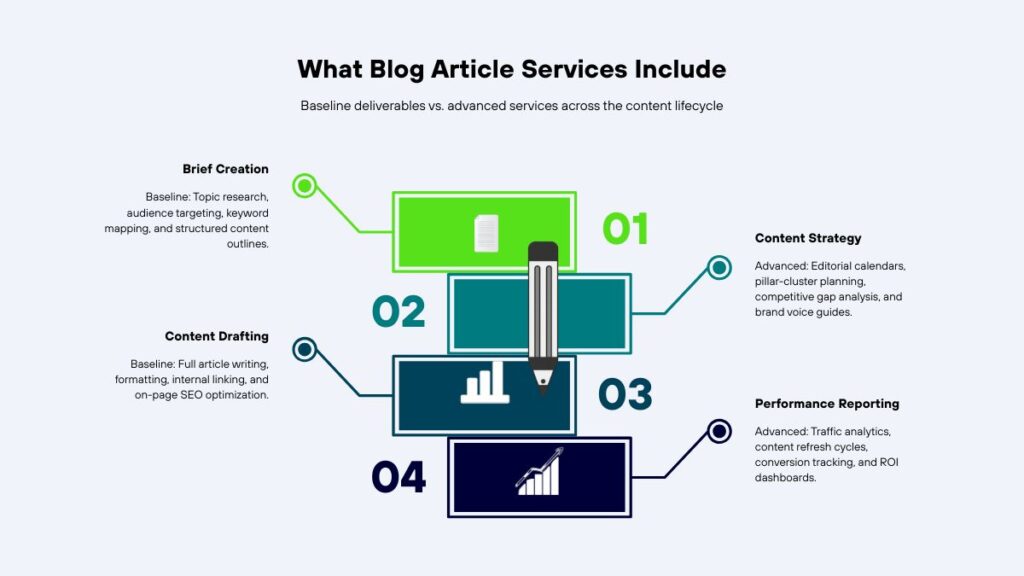
Not every provider will use the same labels, but most professional blog content services follow a similar structure. When you strip away the branding, you’ll usually see a stack of deliverables like the ones below.
Typical baseline deliverables
A serious blog article service usually includes:
- Goal‑driven topic ideation
The provider proposes topics based on your ideal customers, funnel stage, and search demand. Instead of “we can write about anything,” you get a curated list of ideas tied to customer questions, use cases, and product or service themes. - Research and SEO input
Before writing, someone looks at existing search results and competitor content to understand what readers expect to see on the page. The provider considers search intent, related queries, and basic keywords so each piece has a chance to rank instead of drifting in a vacuum. - Content briefs or outlines
Good blog writing services don’t jump straight into drafting. They create outlines that define the angle, structure, key talking points, and any internal links to include. You can review and refine these briefs, which reduces misalignment later. - Drafting the article
A writer turns the brief into a full article that matches your tone and depth expectations anything from introductory explainers to technical deep dives. They bring in examples, analogies, or short stories where relevant so the piece feels human and specific, not just keyword‑heavy. - Editing and proofreading
An editor reviews the draft to tighten the structure, improve clarity, fix errors, and ensure the article delivers on the brief. This editorial layer is essential if you want consistent quality rather than “whatever the writer turned in.” - On‑page SEO basics
The final article comes with logical headings, naturally integrated target phrases, internal link suggestions, and meta title/meta description recommendations. The aim is not to “stuff” keywords but to make the post easy to understand for both readers and search engines. - CMS‑ready formatting
The content is delivered in a format that’s easy to paste into your CMS, with headings, bullet lists, and links already indicated. Some providers even upload directly if you grant access and agree on a workflow.
What higher‑tier services add
More advanced content writing agencies and blog content services stack additional layers on top of that baseline. For example:
- Editorial strategy and content calendar
Rather than discussing topics one post at a time, you co‑create a multi‑month content calendar organized around pillars and clusters. This helps you cover a topic comprehensively and build topical authority. - Deep research and SME collaboration
For complex industries, providers interview your subject‑matter experts, read technical docs, and synthesize external studies, then translate that into accessible articles. - Thought‑leadership and opinion pieces
Beyond standard “how‑to” posts, they craft perspective pieces frameworks, industry commentary, or original research summaries that help position your brand as an expert, not just an explainer. - Content refresh and optimization
They audit existing posts, identify quick wins, and update them with new data, stronger structure, and improved internal links. In mature blogs, refresh work can have as much impact as net‑new content. - Light analytics and performance recommendations
Some providers send regular updates on which posts are performing best, which topics resonate, and where to double down next, even if they aren’t managing your entire analytics stack.
When you compare providers, ask them to list exactly what’s included per article or per month so you can line up offers side by side.
Types of Blog Article Service Providers
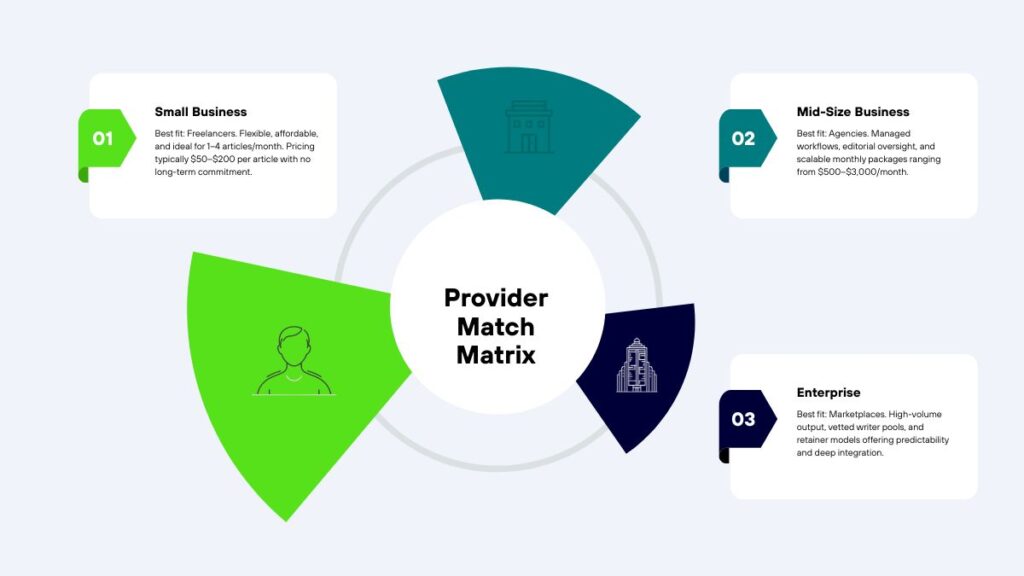
When you search for blog article services or blog writing services today, you mostly find three models: individual freelancers, full‑service agencies, and marketplaces or platforms. Many companies end up using a mix over time, depending on budget and maturity.
Freelancers
Freelance blog writers work directly with you, either independently or through platforms.
Where freelancers shine
- You already have a clear blog content strategy and SEO direction.
- You want a handful of posts each month and prefer a close relationship with one writer.
- You’re comfortable owning briefs, performance tracking, and editorial decisions.
Pros
- Competitive per‑article pricing, especially for straightforward topics.
- Direct communication can lead to a strong understanding of your brand and audience.
- Easy to test different writers until you find a good fit.
Cons
- Capacity is limited; if your writer is busy or unavailable, your publishing schedule can slip.
- You must provide structure: guidelines, deadlines, and editorial feedback.
- Scaling to high volumes or multiple brands usually means adding more freelancers and more coordination work for you.
Content and SEO agencies
Content writing agencies and SEO firms often bundle blog article services into broader SEO and content marketing packages.
Where agencies shine
- You want a partner to own strategy, topic ideation, and SEO blog writing not just drafting.
- You care as much about structure, internal links, and performance as the words themselves.
- You need to scale content production globally without building a large in‑house team.
Pros
- Access to strategists, writers, and editors as a single team.
- Established processes for briefs, style guides, QA, and approvals.
- Easier to ramp production up or down within a retainer compared with hiring or firing staff.
Cons
- Higher minimum investments and typical contract terms, such as three to six months or longer.
- Not every agency specializes in your niche; some may be strong at SEO content but weaker at deep subject‑matter expertise, or vice versa.
Marketplaces and platforms
Content marketplaces list many freelance writers you can browse by niche, rating, and price. This model makes it easy to start small and test different options.
Where marketplaces shine
- You want to test blog content services quickly without long contracts.
- You’re price‑sensitive and willing to invest your own time in vetting writers.
- You may need very different content types and want many options.
Pros
- Broad range of price points, countries, and skill sets.
- Built‑in ratings and reviews help you filter options and spot reliable talent.
- On‑demand: you can commission a single blog post or a batch whenever you need.
Cons
- Quality is inconsistent; you’ll likely test several writers before you find someone who fits.
- You still own the strategy, editorial standards, and performance tracking.
- If you don’t build relationships with a small pool of writers, consistency over time is hard to maintain.
Hybrid and AI‑assisted models
There’s also a growing hybrid segment: services that use AI to speed up ideation or early drafts and then rely on experienced editors and subject‑matter‑aware writers to finish the job. This model can be efficient, but only if the provider is open about where AI enters the workflow, how human editors check for factual accuracy and nuance, and how they avoid the “generic AI blog post” feel that both readers and search engines are starting to detect.
Comparison Table: Provider Types
| Aspect | Freelancers | Agencies | Marketplaces |
|---|---|---|---|
| Strategy support | Limited – you lead | Moderate to high | Minimal |
| Quality control | You own most QA | Agency editors and processes | You plus platform ratings |
| Scalability | Limited by individuals | High (teams and systems) | High (large writer pool) |
| Typical price point | Low–medium per article | Medium–high, often in bundles/retainers | Very wide range |
| Best for | Clear plan, low–mid content volume | Ongoing SEO blog writing and campaigns | Experiments, one‑offs, tight budgets |
| Typical commitment | Per project / informal | 3–12 month packages or retainers | On‑demand |
Pricing Models for Blog Article Services
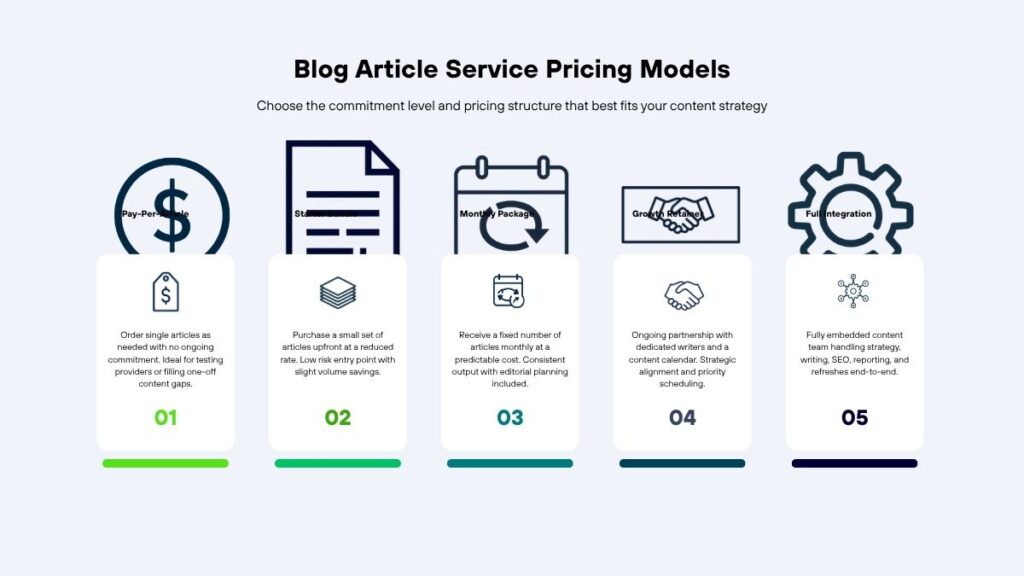
Once you’ve decided which type of provider you prefer, the next question is how they price their blog content services. Most models fall into three categories: pay‑per‑article, monthly blog packages, and retainers.
Per‑article pricing
Per‑article pricing is simple: you pay a fixed fee for each blog post delivered.
When this works well
- You need only a few posts to support a specific campaign or product launch.
- You’re testing a new provider before committing to a larger engagement.
- You have an internal content strategy and just need extra hands.
What influences the fee
- Length: Shorter educational posts cost less than long, in‑depth guides.
- Complexity: Technical topics, compliance‑sensitive niches, or thought leadership pieces command higher rates than light lifestyle content.
- Included services: Some providers quote “draft only” prices; others include briefs, editing, and SEO optimization in one fee.
Most “best blog writing services” guides show a wide spectrum here, from budget offerings that focus on basic copy to premium agencies charging more for research‑heavy or conversion‑oriented content.
Monthly article packages
Packages bundle a fixed number of blog posts per month commonly 4, 8, or 12.
When this works well
- You want a predictable publishing rhythm without managing each piece as a separate project.
- You aim to grow organic traffic and authority steadily over time.
Benefits
- Easier to budget and forecast your content spend.
- Providers can plan ahead, which often leads to better topic sequencing and quality.
- You can align package size with your capacity to review and publish.
Many content writing agencies use packages as a stepping stone between ad‑hoc work and full retainers, especially for small to mid‑sized businesses building their first serious blog content engine.
Retainers and integrated programs
Retainers bundle blog article services with content strategy, SEO, and sometimes other assets like landing pages and lead magnets.
When this works well
- Your blog is a central growth channel, especially in B2B or high‑value B2C.
- You want a partner to own strategy and execution together, not just “take orders.”
- You have clear growth targets for organic traffic, SQLs, or revenue attributable to content.
What to expect
- Longer commitments, but in exchange you get ongoing planning, reporting, and optimization.
- Access to a cross‑functional team: strategists, editors, writers, and sometimes designers or outreach specialists.
Market analyses of the blog writing service segment suggest that as companies mature, they often migrate from one‑off articles and small packages toward retainers, especially when they see that consistent, well‑structured blogging drives measurable pipeline over time.
Comparison Table: Pricing Models
| Model | Minimum Commitment | Cost Predictability | Flexibility | Best For |
|---|---|---|---|---|
| Per article | Very low (1–2 posts) | Medium | High | Trials, one‑offs, topping up internal capacity |
| Monthly package | 1–3 months typical | High | Medium | Small–mid businesses building consistency |
| Retainer | 3–12+ months | High | Low–medium | Growth‑stage brands and multi‑brand programs |
How Blog Article Service Workflows Typically Run
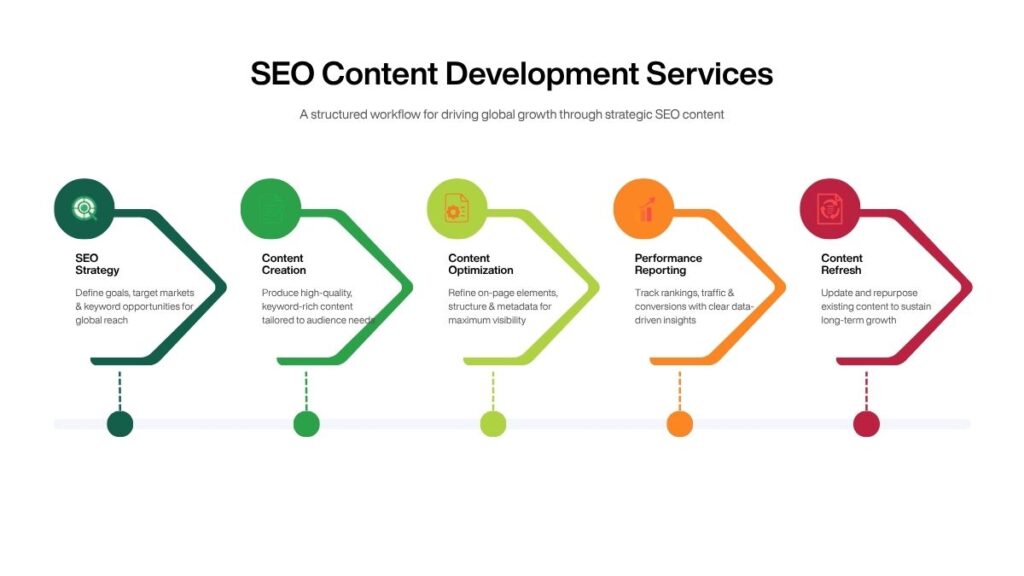
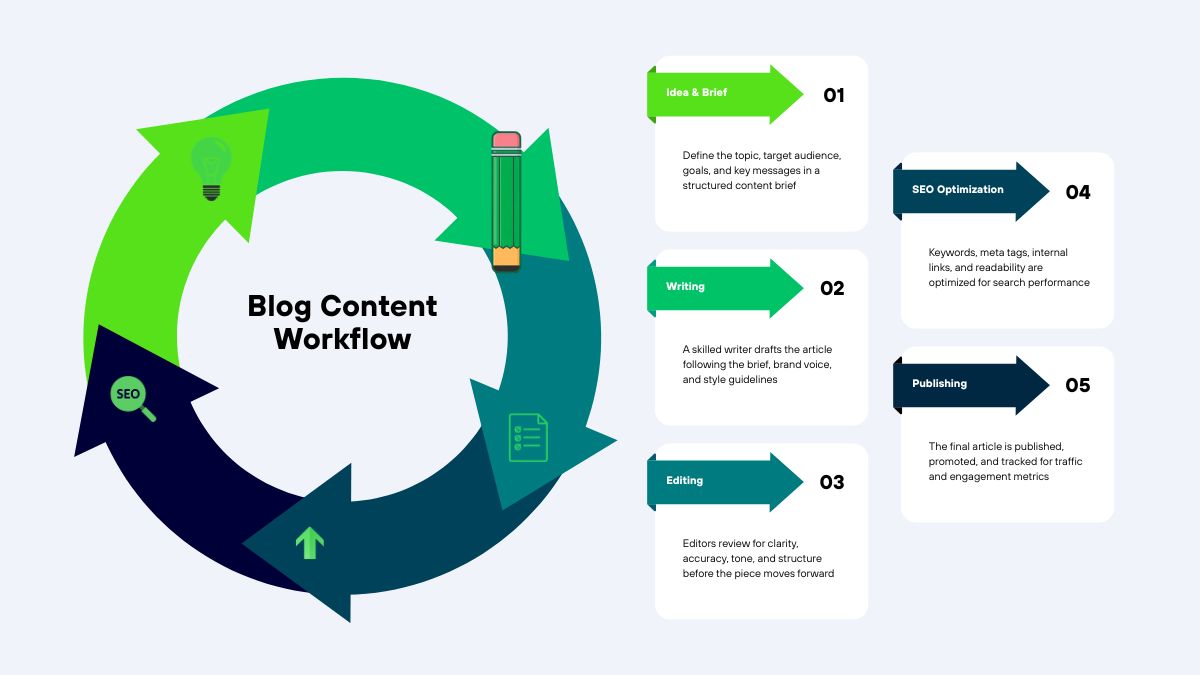
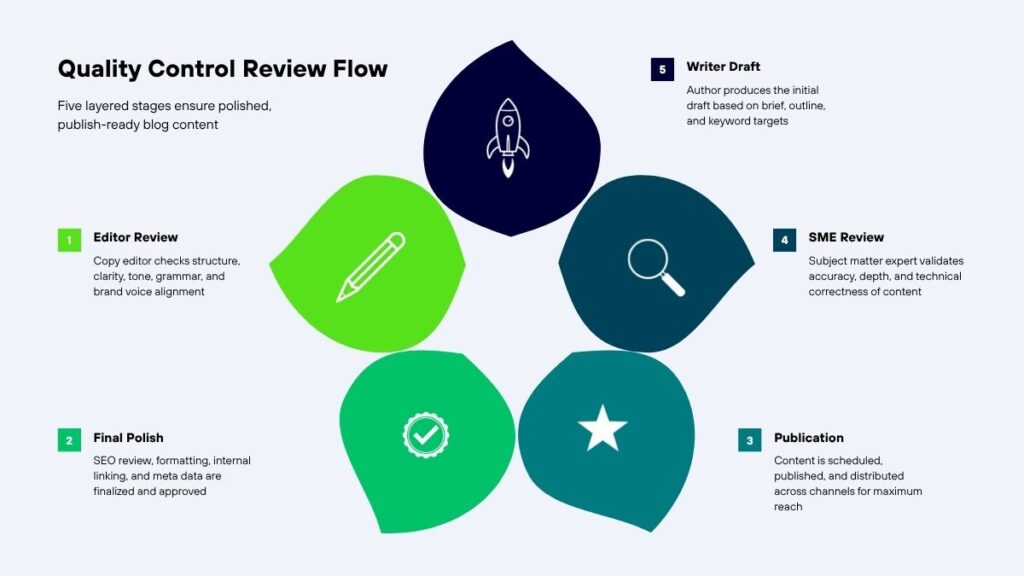
Knowing how the process works makes it easier to choose a provider and set expectations internally. While each company has its nuances, most professional blog article services follow a version of this five‑step workflow.
Step 1: Onboarding and discovery
In the first few weeks, you and the provider align on:
- Business objectives: traffic growth, thought leadership, lead volume, or a mix.
- Priority audiences and their key questions.
- Your existing content assets and what’s already performing well.
- Brand voice, approval workflows, and any compliance boundaries.
This is also the ideal time to plug in any existing SEO work. If you’re planning a fresh SEO audit or already have one, sharing those insights helps the provider prioritize topics that support your broader search strategy rather than working in isolation.
Step 2: Topic planning and brief approval
Once there’s shared context, the provider drafts:
- An editorial calendar for the next 1–3 months with proposed titles and angles.
- Content briefs for the first set of posts, including target keywords, structure, and internal link suggestions.
You review, suggest adjustments, and confirm the order of production. From this point, both sides know what’s coming and why each article exists.
Step 3: Writing and internal editorial review
Writers then turn briefs into full articles, and editors review them before you ever see them. Internal review typically checks for:
- Accuracy of the angle and messaging.
- Logical flow and reader experience.
- Adherence to your voice and brand guidelines.
- Basic SEO best practices headings, keyword usage, and links.
If AI tools are involved at any stage, this is where human editors are responsible for turning rough output into something on‑brand, accurate, and genuinely helpful.
Step 4: Your review and revisions
You receive the drafts and provide feedback. In a healthy relationship, you’re focusing on:
- Nuance and correctness from a subject‑matter and brand perspective.
- Whether the article reflects how you actually talk to customers.
- Any gaps in examples, screenshots, or references you want to add.
Most providers include at least one revision round per article. For complex topics, two structured revision rounds are common in the first months while both sides learn each other’s preferences.
Step 5: Final delivery, publishing, and feedback loop
After revisions are approved, the provider sends final, CMS‑ready content or publishes it directly if that’s part of your agreement. Over time, a feedback loop develops:
- You see which posts perform best via your analytics.
- The provider proposes follow‑up topics, content refreshes, or deeper cluster content accordingly.
- The editorial calendar evolves to reflect real performance, not just initial assumptions.
By around the 90‑day mark, this workflow should feel predictable. If it doesn’t, that’s a cue to revisit expectations or processes with your provider.
Quality Control and Editorial Standards You Should Expect
Publishing blog posts that are technically correct but off‑brand, generic, or inconsistent can do more harm than good. Quality control is what separates a serious blog content service from a cheap “article mill.”
Editorial structure and voice
A solid provider will:
- Document your preferred tone, style, and terminology in a basic style guide.
- Assign an editor who reads every post for structure, flow, and consistency not just spelling.
- Share examples of how they’ve adapted voice for other clients in different industries.
This is especially important for global brands whose readers span markets and cultures; tone and complexity often need to be adjusted depending on who you’re targeting.
Originality, plagiarism, and AI policies
In an era of abundant AI content, you should know exactly how your provider works:
- Do they run plagiarism checks on final drafts?
- Where do they allow AI to assist, and where do they insist on human judgment?
- How do they handle citations, attributions, and references to third‑party research?
The goal isn’t to micromanage tools but to protect your brand and ensure your blog remains a trustworthy resource instead of a generic content farm.
Subject‑matter depth and accuracy
For technical or regulated topics, blog article services should be ready to support subject‑matter depth, not just surface‑level summaries. That usually means:
- Matching you with writers who have relevant background or who are comfortable interviewing your experts.
- Building time into the process for fact‑checking and SME review.
- Being transparent about what they can and cannot accurately cover without additional expert input.
If accuracy is non‑negotiable for your space, confirm how content moves through internal and external review before going live.
SEO and Topical Authority in Blog Article Services
For most brands, especially those in competitive global markets, blog article services are tightly connected to SEO. Publishing any content is not enough; the blog has to support your visibility for the terms and themes that actually matter.
Keyword research and search intent
Good providers treat keyword research as more than “find a phrase and use it a few times.” They:
- Look at live search results to understand what search engines and readers expect for a query: guides, checklists, comparisons, or something else.
- Separate top‑of‑funnel questions from mid‑funnel comparisons and late‑funnel decision content, then plan articles accordingly.
- Avoid chasing only high‑volume, highly competitive phrases and instead build coverage across a mix of head, mid‑tail, and long‑tail terms.
Pillar pages, content clusters, and internal linking
Most content writing agencies that specialize in SEO blog writing now use some form of pillar‑and‑cluster structure in their blog content strategy. In practical terms, this looks like:
- A few comprehensive pillar pages that target major topics.
- Supporting blog posts that go deep into sub‑topics, each linking back to the pillar and to each other where relevant.
- Internal links from these posts to your key product, service, or conversion pages.
This structure makes it easier for search engines to interpret your site’s topical coverage and for readers to move logically through related content.
Refreshing and optimizing existing content
As your library grows, the fastest SEO wins often come from improving what you already have. Blog article services that understand this will:
- Audit older posts for outdated information, missing internal links, or thin sections.
- Propose refreshes that update data, add examples, and better match current search intent.
- Coordinate with any SEO audits or technical work so on‑page changes align with broader site improvements.
If you’re working with a provider that also offers SEO audit services and SEO content creation, you can treat blog article services as one piece of a coordinated search strategy instead of a standalone “content stream.”
Which Blog Article Service Model Fits Your Business?
The right model for you depends on a few practical questions: how much content you need, how complex your topics are, how strong your internal strategy is, and how much risk you’re willing to take on quality and consistency.
Business type vs model
| Business Type | Recommended Provider Type | Recommended Model | Notes |
|---|---|---|---|
| Solo / micro‑business | Freelancer or marketplace | Per article or small package | Great for occasional posts and low‑risk experiments |
| Small local business | Freelancer or small agency | Monthly package | Enough consistency to show up in search and locally |
| B2B SaaS | Content/SEO agency | Retainer or larger package | Complex topics and long sales cycles |
| E‑commerce / DTC | Agency or hybrid | Package + refresh program | Mix of product education and SEO traffic |
| Marketing agencies | White‑label partner | Custom retainer | Need predictable, multi‑client content capacity |
| Niche publishers | Niche freelancers + editor | Per article / small retainer | Expertise and depth more important than pure volume |
Think of this table as a starting point, not a rulebook. For instance, a small but highly technical B2B startup may skip freelancers entirely and go straight to a small, specialist content writing agency because the risk of incorrect content is too high.
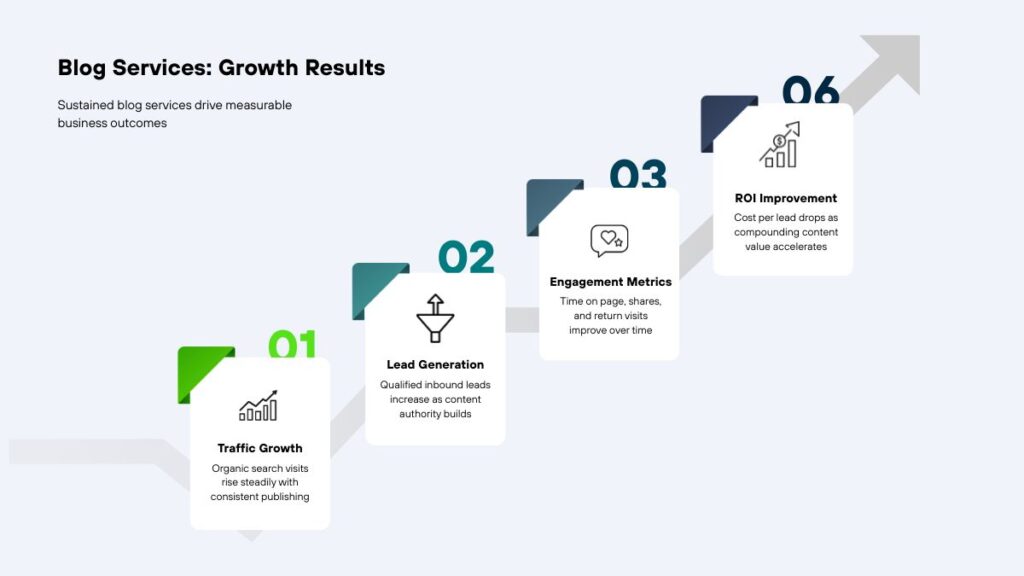
How to Choose a Blog Article Service Provider
Even with a clear model in mind, the market is crowded. Shortlists from recent years alone surface dozens of blog writing services across price points and regions. A structured selection process helps you avoid decision fatigue and choose a partner that actually fits your team.
Core evaluation criteria
When you talk to potential providers, focus on:
- Fit with your audience and industry – Do they understand how your buyers research, decide, and purchase? Can they speak your language?
- Clarity of scope and deliverables – Can they show you a sample statement of work that spells out what you get each month?
- Maturity of editorial and QA processes – Is there a clear workflow from brief to draft to edit to approval? Who signs off on quality before you see content?
- SEO and strategy alignment – Can they connect blog topics to your SEO goals, or do they talk about SEO only at the keyword level?
- Communication and collaboration style – Will you have one main contact? How often will you meet? How do they handle feedback and conflict?
Questions to ask in early conversations
To make the evaluation concrete, ask questions like:
- “Can you walk us through a recent blog content strategy you implemented for a client similar to us?”
- “What does a standard blog package include, and what would be considered an extra?”
- “Who actually writes and edits our content? Are they in‑house, freelance, or a mix?”
- “How do you handle originality checks and AI usage in your workflow?”
- “What happens in the first 30, 60, and 90 days if we work together?”
- “How do you measure the success of your blog article services for clients?”
Their answers will tell you a lot about whether they see themselves as a content vendor or as a partner in your growth.
Red flags to avoid
Consider it a warning sign if a provider:
- Guarantees specific rankings or traffic numbers in a short period, without looking at your current state.
- Can’t name who edits your content or how they handle QA.
- Refuses to discuss how they use AI, or suggests it replaces editorial judgment altogether.
- Provides only generic samples that don’t show an understanding of your type of business.
If you’re looking for a partner to integrate blog article services with a wider SEO content strategy, working with a team that already offers both SEO audit and SEO content creation can reduce handoffs and misalignment between strategy and execution.
Mini Case Examples: What Blog Article Services Can Deliver
Every situation is different, but certain patterns show up repeatedly when companies use blog article services well. Here are a few simplified, representative scenarios.
Case 1: Early‑stage B2B SaaS
A global B2B SaaS company had a strong product but a thin blog: a few old launch posts and some generic thought pieces. They partnered with a content writing agency for six SEO‑driven posts per month for a year. Together they:
- Built topic clusters around main use cases and integrations.
- Created comparison articles targeting “tool A vs tool B” queries to catch buyers evaluating alternatives.
- Linked educational posts to key product and demo pages.
After several months, organic traffic from the blog became one of the top sources of demo requests, and sales teams started using specific articles to answer recurring questions during the sales process.
Case 2: E‑commerce brand selling complex products
An e‑commerce company selling technical equipment realized many pre‑sale questions were coming through support. They worked with a blog article service to:
- Turn support tickets into how‑to articles and buying guides.
- Publish installation and maintenance content that reduced returns.
- Build internal links from blog posts to category pages and individual products.
The result: fewer repetitive support queries, more informed customers, and a noticeable lift in organic traffic to high‑margin product categories over time.
Case 3: Marketing agency scaling content for clients
A digital marketing agency wanted to offer blog content services to multiple clients without hiring a full in‑house writing team. They engaged a white‑label blog writing service on a retainer.
- The agency handled client strategy, briefs, and approvals.
- The provider handled writing, editing, and SEO blog writing optimization.
- Together, they standardized formats and style guides across niches.
This allowed the agency to add a new recurring revenue stream while keeping internal focus on strategy and account management, rather than production.
These examples aren’t guarantees, but they illustrate what can happen when blog article services are tied to clear goals, consistent publishing, and sensible SEO.
FAQ: Blog Article Services for Global Businesses
What exactly are blog article services?
Blog article services are professional services that handle planning, research, writing, and optimization of blog posts for your business. Instead of relying solely on internal staff, you bring in specialists to produce consistent, high‑quality articles that support traffic, leads, and brand authority.
What’s usually included in a blog article service?
Most providers include topic ideation, basic SEO research, outlines or briefs, drafting, editing, and CMS‑ready formatting. More comprehensive services add editorial strategy, content calendars, content refresh, performance insights, and sometimes direct publishing.
How much do blog article services cost?
Costs vary widely depending on whether you work with freelancers, agencies, or marketplaces; how complex your topics are; and how much strategy and SEO is bundled in. You’ll see everything from low per‑article rates for simple posts up to structured retainers for integrated SEO blog writing and content strategy. The key is to compare what you get for each dollar, not just the headline price.
What affects the price of a blog article?
Price is influenced by article length, topic difficulty, how much original research or SME input is required, the level of SEO optimization, and the number of revisions included. Technical and regulated topics almost always cost more than general consumer content because they demand more expertise and checking.
How do providers ensure quality and originality?
Serious blog article services use a layered approach: they rely on editors, style guides, plagiarism checks, and clear AI policies. They also work with you to define brand voice and expectations upfront and refine based on feedback in the first few months.
Can blog article services handle niche or technical subjects?
Many can, but not all. For technical or niche industries, ask specifically about writer backgrounds, request relevant samples, and confirm whether they’ll interview your internal experts when needed. You may also decide to pair niche freelancers with an in‑house editor or agency strategist for the best of both worlds.
How long will it take before we see results?
Blog content usually pays off over months, not days. You may see early engagement and some rankings within a few weeks, but more substantial organic growth tends to show after several months of consistent publishing and optimization. Your starting domain authority, competition level, and existing SEO health will all influence timelines.
Should we choose a freelancer, an agency, or a marketplace?
If you’re comfortable leading strategy and editing in‑house, freelancers or marketplaces can be a cost‑effective way to get blog posts written. If you want a partner who can design and execute a full blog content strategy, including SEO, a content writing agency or integrated provider is often a better fit. Many companies start with one model and evolve into another as their needs and budgets grow.
How many blog posts per month do we really need?
There’s no one‑size‑fits‑all answer, but many businesses see traction with 2–8 high‑quality posts per month, especially when those posts are planned as part of coherent topic clusters and linked to key pages. Publishing fewer but better posts usually beats churning out large volumes of shallow content.
How do blog article services connect to our SEO and broader content strategy?
Ideally, your blog article provider coordinates with whoever owns SEO and content strategy whether that’s in‑house or an external partner. That means using shared keyword priorities, informing blog topics with SEO audits, and building internal links that support core product and service pages. When blog article services, SEO audit work, and SEO content creation are aligned, your blog becomes a central part of your growth system instead of a side project.