SEO writing in APAC is the craft of designing, writing, and localising search-optimised content specifically for audiences across the Asia-Pacific region. It sits at the junction of SEO strategy, content marketing, and regional localisation, so that the same core message can rank and resonate in markets as different as Japan, Indonesia, Singapore, and Korea.
This guide unpacks what “seo writing apac” really means in practice, which services are usually included, how an APAC-capable workflow is structured, what affects pricing, and how to choose a partner such as SEOSERVICES1 with confidence. The goal is to give you a practical playbook rather than broad advice that only fits a single country or language.
What Is SEO Writing in APAC?
SEO writing in APAC is the process of creating content that is discoverable in search and genuinely useful to readers across multiple Asia-Pacific markets. It involves planning topics, structure, and language so your pages satisfy regional search intent and still feel like they were written for a local audience.
In concrete terms, APAC-focused SEO writing usually covers:
- Market-specific keyword and search-intent research across your priority APAC countries.
- Content planning that maps those intents to different page types and formats.
- Writing or adapting copy in the right language, tone, and level of detail for each market.
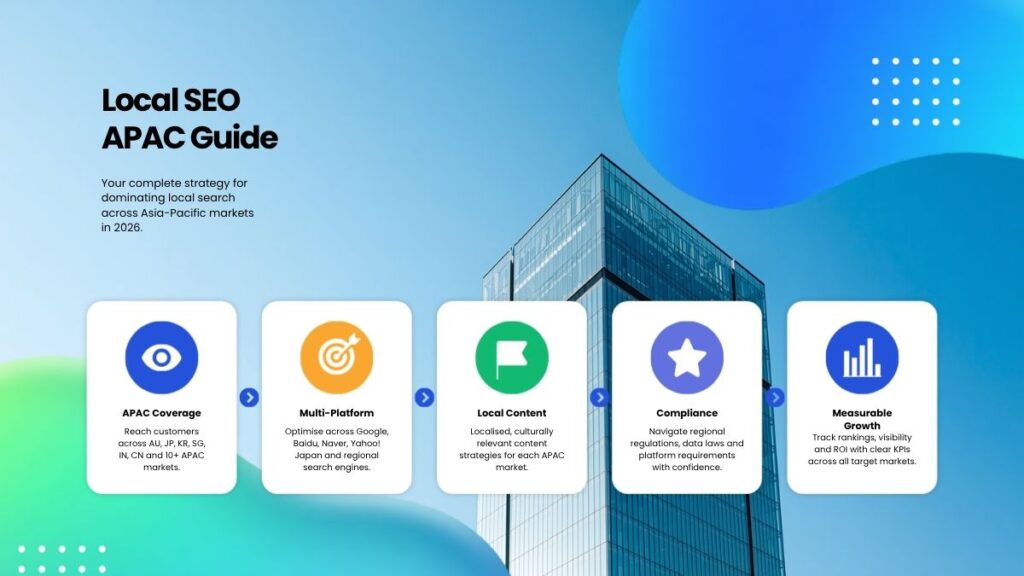
- Structuring pages so they can perform on Google as well as on engines like Baidu, Naver, and Yahoo! Japan.
- Measuring performance by market and iterating content based on real user behaviour.
How APAC SEO Writing Differs from Generic SEO Copy
Standard SEO copywriting often assumes one language, one primary search engine, and one cultural context. APAC SEO writing has to work across many.
Key distinctions include:
- Language and script variety: You may need English alongside Simplified and Traditional Chinese, Japanese, Korean, Bahasa Indonesia, Thai, or Vietnamese, often with different scripts and character counts to consider.
- Search ecosystem variety: Google dominates some APAC markets, but Baidu, Naver, and Yahoo! Japan heavily influence search in others, which affects how titles, snippets, and metadata should be written.
- Cultural expectations: What counts as persuasive or trustworthy in one country can feel exaggerated or too blunt in another, even when the underlying offer is identical.
Because of this, seo writing apac treats “rankability” and “local resonance” as equally important design goals from the very beginning.
Typical Outcomes of APAC SEO Writing Projects
Over a sustained period, a strong APAC SEO writing program tends to produce:
- Broader organic reach across multiple APAC markets instead of visibility being concentrated in only one or two.
- Better engagement metrics such as more time on key pages, deeper content consumption, and higher scroll depth because pages answer local questions in familiar language.
- Higher conversion rates from high-intent pages after they are re-written or localised for specific APAC markets.
- A structured content foundation that can be extended as you enter new markets, launch new products, or update regional positioning.
Why APAC-Specific SEO Writing Expertise Matters
APAC-specific expertise matters because the region is diverse in almost every way that affects content: language, culture, search engines, regulation, and digital habits. Teams that try to deploy a single “global” content pattern frequently discover that their pages either fail to rank or simply do not convert in key APAC markets.
APAC Digital and Search Context (2024–2026 Snapshot)
Between 2024 and 2026, APAC digital marketing has continued to evolve along a few clear lines:
- The region combines digitally mature markets such as Japan, Korea, and Singapore with high-growth markets where search habits and platforms are still shifting.
- Users jump between search engines, social apps, messaging platforms, and marketplaces as they evaluate brands, often in the same purchase journey.
- Search strategies increasingly focus on distributing content across multiple systems, not just on one global search engine.
SEO writing apac has to fit into this context: it needs to produce content that can be surfaced, understood, and trusted wherever your audience chooses to look.
Cultural and Linguistic Nuance Across APAC
Culture and language shape how your words are received, even when the factual content is identical. Two pages that look similar in English may need very different treatments once they are adapted for other markets.
Consider, for example:
- Tone of voice: Some markets respond better to formal, respectful language; others prefer concise, straight-to-the-point copy.
- References and examples: Local holidays, news, and everyday examples need to be relevant to the reader’s context, not to your headquarters.
- Information depth: In some countries, readers expect a lot of background and explanation; in others, they want short, actionable information first, then details on demand.
An experienced APAC SEO writing team does not guess at these differences; it surfaces them during discovery and builds them into briefs and guidelines.
Search Engine Diversity and Platform Behaviours
From an SEO perspective, APAC is distinctive because multiple search engines and content platforms share the stage. Focusing only on Google can leave you under-served in markets where local engines are central.
Some patterns to note include:
- In parts of Southeast Asia and Oceania, Google’s dominance still makes Google-oriented SEO essential.
- In mainland China, Baidu and local ecosystems require Chinese-language content and have different signals of relevance and trust.
- In Korea, Naver integrates search with blogs, communities, and in-platform content, which can lead to different content strategies compared with Google-only markets.
- In Japan, Yahoo! Japan continues to matter alongside Google, creating a dual-engine environment with distinctive SERP layouts.
For seo writing apac, this diversity means being deliberate about how you phrase titles, structure snippets, and support content for different engines and user journeys.
Core SEO Writing Services for APAC Markets
APAC SEO writing services can be grouped into several service types that reinforce each other. Together, they create a system, not just one-off pieces of copy.
Strategy and Keyword-to-Content Mapping
The strategic layer determines what to write, for whom, and in which markets. Typical activities here include:
- Selecting priority APAC markets and languages for the next phase of growth.
- Conducting keyword and search-intent research per market to uncover how local users describe their needs.
- Mapping queries and intents to specific content types for example, creating guides for early research keywords and landing pages for high-intent phrases.
This mapping helps you avoid random content creation and ensures that every page has a clear purpose within your APAC strategy.
Long-Form Content and Resource Hubs
Long-form content lays the groundwork for authority and education. In APAC programs, this often includes:
- Country-aware guides explaining processes, regulations, or best practices using local examples where appropriate.
- Topic hubs or resource centres that collect related articles and FAQs for recurring themes.
- Evergreen explanatory content that can be updated as markets or regulations change.
Here, seo writing apac emphasises logical structure clear headings, summaries, and signposting so readers in any market can quickly find the sections that matter to them.
Landing Pages, Product Pages, and Localised Website Copy
High-intent content is where SEO writing’s commercial impact becomes most visible. Typical assets include:
- Landing pages aligned with specific APAC campaigns or high-value keywords.
- Product and service pages rewritten so that features, benefits, and proof match local expectations.
- Localised “About”, “Solutions”, or “Industries” pages that reflect how you operate in each APAC region.
These pages must balance conversion, clarity, and SEO structure while still allowing for localised messaging and trust signals.
FAQ, Help Centre, and Knowledge Base Content
Your FAQ and help content often do double duty: it assists existing customers and answers questions that new prospects type into search. In an APAC context, that means:
- Writing concise, answer-first responses that can be lifted into snippets or AI-style overviews.
- Clarifying variations in policies, shipping, or support across APAC markets so readers do not have to guess.
- Organising content so that it is easy to navigate in multiple languages and across different scripts.
APAC SEO writing frequently involves reshaping existing support content so that it is both easier to use and easier to find.
Thought Leadership and Demand-Generation Content
For B2B brands, complex products, or longer buying cycles, APAC SEO writing can extend into thought leadership and demand-generation. Common formats include:
- Articles that interpret APAC market trends or regulatory changes for your audience.
- Commentaries that share a distinct point of view on problems you help solve across the region.
- Hybrid SEO/editorial pieces that are structured for search but written with a more conversational, opinionated tone.
These assets may not be the top-converting pages on your site, but they play a key role in building trust and attracting relevant organic traffic over time.
Search Ecosystems and Platforms Across APAC
Designing SEO writing for APAC requires understanding not just who you are writing for, but also where and how they search. That means mapping content to the ecosystem, not only to one engine.
Google-Dominant APAC Markets
In markets where Google is the main search engine, familiar SEO writing practices still apply:
- Crafting clear titles and meta descriptions that accurately describe the content and reflect local search terms.
- Using descriptive headings and logical sectioning so readers and crawlers can scan easily.
- Incorporating definitions, lists, and FAQs that help your content surface in richer result types.
Even here, an APAC lens matters: your examples, spelling conventions, and references should be chosen with the specific market in mind, rather than assuming global norms.
Baidu, Naver, and Yahoo! Japan
When your SEO writing is aimed at markets where Baidu, Naver, or Yahoo! Japan play a central role, additional factors come into play:
- Baidu often emphasises Chinese content and has specific preferences around metadata, sitemaps, and on-page signals.
- Naver’s integration of search results with blogs, cafés, and other in-platform content can influence how you support branded content beyond your main website.
- Yahoo! Japan can present information differently from Google, which affects how snippets and titles should be crafted.
An APAC SEO writing strategy acknowledges these differences upfront so that content is designed to work with the grain of each ecosystem.
What These Platforms Mean for SEO Writing Structure and Tone
Because user expectations and SERPs differ across platforms, your written structure and tone must sometimes be adapted per market. For example:
- Titles may be more descriptive or more compact depending on what tends to perform best locally.
- Copy length may be adjusted if users show a clear preference for short answers or for detailed explanations.
- Internal linking patterns or on-page references may be tuned to encourage navigation that matches how users move through your site in each market.
Rather than rewriting everything from scratch, teams often create a core structure and then specify local adjustments by market.
Localization and Multi-Language SEO Writing in APAC
Multi-language localisation is one of the biggest practical challenges in APAC SEO writing. Handling it with care prevents inconsistencies and protects your brand.
Translation vs Transcreation vs Original In-Language Drafting
There are three main approaches to creating content for multiple APAC languages:
- Translation, where content is converted from a source language into a target language with minimal changes in meaning or emphasis.
- Transcreation, where writers adapt the content more creatively so that the message lands in a way that fits the local culture and expectations, even if wording changes more significantly.
- Original in-language drafting, where content is developed directly in the target language based on local research, rather than being derived from a source text.
Choosing the right approach depends on factors like regulatory strictness, brand positioning, and the strategic importance of each market.
In-Market Review and Quality Assurance
In APAC, in-market review is not a luxury; it is a risk-management and quality step. Reviewers often native speakers or local subject-matter experts can:
- Spot phrasing that is technically correct but culturally awkward or out of step with local norms.
- Identify examples, references, or calls to action that should be adjusted to match local expectations.
- Confirm that regulatory language and disclaimers meet local guidelines.
Integrating this review into the workflow ensures that SEO writing does not introduce unintended issues.
Maintaining Consistent Brand Voice Across Markets
Even while localising, brands need to maintain a consistent voice. APAC SEO writing achieves this by:
- Creating shared voice and tone guidance that covers multiple languages and lists approved patterns and phrases.
- Providing side-by-side examples of copy in different languages that all express the same core brand personality.
- Using a central editorial team to coordinate with local writers and reviewers, so decisions remain aligned.
This keeps your APAC content from feeling like a collection of unrelated local websites.
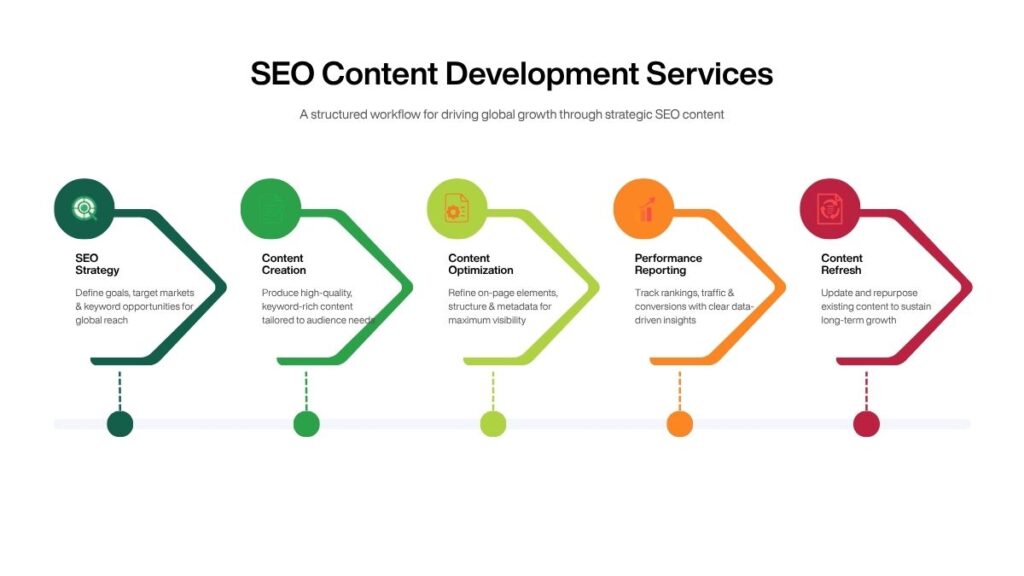
APAC SEO Writing Workflow: From Brief to Published Content
A clear workflow makes it realistic to manage SEO writing across multiple markets and languages without losing control. Below is a structured process many APAC teams adopt, adapted to the realities of multi-market work.
Stage 1 – Clarify Search Intent and APAC Audience
The first step is aligning on who the content is for and what they hope to achieve. This involves:
- Prioritising which APAC markets and segments are targeted for this piece or cluster of content.
- Identifying key search intents by market such as learning, comparing, or making a purchase decision.
- Surfacing common questions or concerns local audiences have, often by talking with in-market sales, customer success, or support teams.
A clear intent map reduces the risk of content that is technically correct but strategically off-base.
Stage 2 – Build the APAC Material Pack
A material pack is a shared reference file that keeps everyone working from the same information. It typically contains:
- Keyword research and search intent summaries for each market in scope.
- Product and service details relevant to APAC, including constraints or region-specific features.
- Notes on tone, examples, and sensitivities per market.
- Any existing content that should be reused, updated, or linked.
Writers and reviewers draw on this pack so they do not repeatedly ask for the same background information.
Stage 3 – Draft for Structure, Then Language
Drafting begins with structure rather than trying to perfect every sentence in one go. That means:
- Outlining the content into sections such as definitions, benefits, implementation steps, examples, and FAQs.
- Deciding which tables, diagrams, or bullet lists would actually make the topic clearer.
- Writing initial paragraphs in a pivot language, or directly in local languages if the team is set up that way.
Once the structure is agreed, writers refine the language to balance SEO needs with flow and readability.
Stage 4 – Optimize On-Page Elements, FAQs, and Internal Links
With a solid draft in place, optimisation focuses on the elements that influence visibility and navigation:
- Titles and meta descriptions aligned with local keywords and click-through patterns.
- Heading structures that make sense to both human readers and search engines.
- FAQ blocks answering distinct questions in short, self-contained paragraphs.
- Internal links that guide readers towards related content and key conversion pages.
This step often transforms a good draft into a search-ready, user-friendly page.
Stage 5 – Localization, In-Market Review, and Compliance
For multi-market content, localisation is then carried out according to the chosen approach (translation, transcreation, or in-language drafting). The process usually includes:
- Adapting wording and examples to suit each market while preserving the core structure and intent.
- Running in-market reviews for nuance and regulatory compliance if needed.
- Finalising local versions for upload, with any country-specific disclaimers or notes included.
The outcome is a set of local pages that share a strategic backbone but feel like they were written locally.
Stage 6 – Publication, Measurement, and Iteration
After going live, the focus shifts to improvement:
- Monitoring performance metrics such as rankings, traffic, and conversions by market and content type.
- Collecting qualitative feedback from local teams who are closest to customers.
- Updating or expanding content to respond to new search behaviour, product updates, or regulatory changes.
SEO writing apac becomes a cycle of learning and refinement, not a static deliverable.
Pricing and Engagement Models for SEO Writing in APAC
Because APAC SEO writing spans multiple markets, languages, and content types, pricing usually needs context before it can be meaningful. Rather than one fixed rate, most programs combine several cost drivers and engagement models.
Cost Drivers in APAC SEO Writing
Four factors commonly influence cost:
- Markets in scope: Each additional country introduces its own research, localisation, and review workload.
- Languages required: Handling English plus multiple Asian languages involves coordination between translators, transcreators, and local reviewers.
- Content mix and volume: A handful of high-value landing pages is different from a multi-year program producing blogs, resources, and knowledge-base content.
- Industry complexity: Highly regulated or technical sectors often require more senior writers and additional review rounds.
A transparent provider will walk through these drivers with you rather than quoting a single number without context.
Retainer-Based vs Project-Based vs Per-Language Engagements
Most APAC content programs rely on one or more of these models:
- Retainer-based engagements: Suitable when you want ongoing content production and localisation across multiple markets, with a predictable monthly or quarterly commitment.
- Project-based engagements: Good for defined initiatives such as launching a new APAC website section, building a resource hub, or localising a specific campaign.
- Per-language or per-market packages: Useful when you are entering a new market gradually and want to focus on one or two languages at a time.
The right model often changes as your APAC presence matures.
Example Scenarios for Different Client Types
A few practical examples:
- A SaaS company piloting one APAC market might commission a project covering a focused set of landing pages and nurture content in one language, then expand into a retainer after seeing traction.
- A regional ecommerce brand active in five countries may maintain a retainer that funds ongoing category copy, seasonal campaigns, and help-centre localisation across all markets.
- A global enterprise with long planning cycles might run a series of large projects each year, each focused on specific divisions or product lines, but still rely on structured SEO writing workflows across APAC.
Understanding which scenario you resemble helps you frame initial conversations with providers.
APAC SEO Writing Use Cases by Industry
The general principles of seo writing apac apply across sectors, but each industry tends to emphasise different kinds of content and workflows.
B2B and SaaS Across APAC
For B2B and SaaS organisations, common needs include:
- Solution pages and industry-specific landing pages that explain how the product addresses pain points for APAC businesses.
- Educational guides and resource hubs that establish credibility and help prospects progress through complex buying journeys.
- Localised case references or customer stories where approvals and confidentiality allow.
Here, SEO writing balances detailed explanation with clear calls to action aligned with local buyer expectations.
Ecommerce and Marketplaces
Ecommerce brands and marketplaces tend to focus on:
- Category descriptions that clarify product range and benefits while incorporating local search phrases.
- Product-level SEO copy that addresses features, sizing, materials, and usage in a way that matches each market’s norms.
- Support content and FAQs describing payments, shipping, returns, and customer service variations per country.
APAC SEO writing ensures that these elements are discoverable and help reduce friction in the buying process.
Travel, Tourism, and Hospitality
In travel and hospitality, SEO writing often centres on:
- Destination pages that highlight attractions and itineraries relevant to different APAC traveller segments.
- Seasonal and campaign-based content aligned with both local and outbound travel patterns.
- Content explaining policies, safety information, and booking rules in terms that are easy to understand across languages.
Tone must combine inspiration with clarity so that readers feel both excited and well-informed.
Finance, Insurance, and Regulated Industries
For finance, insurance, and other regulated sectors, APAC SEO writing has to be especially careful:
- Product descriptions must balance clarity with strict requirements for disclaimers and disclosures.
- Local regulations may mandate certain phrases or prohibit others, affecting how you present features and benefits.
- Educational content must be accurate, measured, and reviewed by appropriate internal experts.
This inevitably influences workflow, review cycles, and the seniority of writers assigned.
Education, Training, and EdTech
In education and training, typical APAC SEO writing outputs include:
- Course and program pages tailored to local aspirations, job markets, and qualification frameworks.
- Articles aimed at students, parents, or corporate buyers explaining outcomes and pathways.
- Support content about admissions, funding, and visa-related matters where relevant.
Here, seo writing apac balances aspirational messaging with practical details that differ by country.
AI-Assisted vs Human-Led SEO Writing in APAC
AI has become a practical tool in many content teams, but in APAC you need a clear view of where it helps and where it can introduce risk. A hybrid approach typically works best.
Where AI Accelerates APAC SEO Writing
Used thoughtfully, AI can:
- Generate initial outlines and structural options faster than manual brainstorming.
- Draft early versions of content in a pivot language, which writers then localise and refine.
- Summarise research and market notes into concise reference documents.
These uses free human writers to focus on nuance, decision-making, and collaboration with local teams.
Where Native Human Expertise Is Non-Negotiable
There are still many tasks that AI should not handle alone in an APAC context, such as:
- Final wording in local languages where subtle phrasing affects meaning and tone.
- Content in regulated spaces where small misstatements can have legal or reputational consequences.
- Sensitive topics where cultural norms and expectations strongly influence what is acceptable.
In those areas, native or deeply experienced human reviewers remain the final authority.
Designing a Hybrid AI + Human Editorial Workflow
A robust hybrid workflow might look like this:
- Use AI early in the process to explore outlines and draft neutral, structurally sound content in a base language.
- Have skilled SEO writers adapt, enrich, and reorganise that content to align with APAC search intent and brand voice.
- Involve native writers and in-market reviewers to convert or adapt content for each language and market, with AI occasionally used again for minor restructuring or summarisation tasks.
This helps you benefit from speed where it is safe while protecting the quality and appropriateness of what ultimately goes live.
Choosing an SEO Writing Partner for APAC Markets
Selecting the right partner for seo writing apac is a strategic decision that affects how quickly and safely you can scale across markets.
Evidence of APAC Market Experience
Signs of real APAC experience include:
- Examples of projects spanning multiple APAC markets, even if they are anonymised for confidentiality.
- Clear references to working with or around local search engines and platforms, not just Google.
- A demonstrated understanding of localisation challenges beyond simple translation.
Partners who can talk concretely about APAC experiences are usually better equipped to anticipate edge cases before they become problems.
Language and Localization Capabilities
Language capabilities are more than just a list of tongues spoken. Questions worth asking include:
- Which languages are handled in-house and which rely on external collaborators?
- How they decide when to translate, when to transcreate, and when to draft directly in the local language.
- How they structure collaboration between central strategists, SEO specialists, and in-market reviewers.
The answers will show whether localisation is part of their core process or something bolted on at the end.
Workflow, QA, and Reporting
A capable APAC SEO writing partner should be able to explain:
- How they move from brief to outline, to draft, to review, to publication for multi-market content.
- Which quality checks they apply at each stage, including language, compliance, and brand-voice review.
- What sort of reporting you receive whether they share simple volume metrics or tie content performance back to specific APAC markets and business goals.
This level of detail helps you gauge how well they can integrate with your existing teams and systems.
Red Flags and Questions to Ask Before You Sign
Some warning signs to watch for:
- Suggestions that one English version will suffice for “APAC” with minimal localisation.
- Heavy reliance on machine translation with no mention of expert review.
- Vague statements about having “global experience” without specific APAC examples.
- Lack of clarity around who is responsible for in-market approvals or regulatory checks.
When you are exploring APAC SEO writing support, consider asking potential partners to walk through a sample workflow using one of your real use cases. If you want to explore how a dedicated APAC-focused SEO writing setup might work for your organisation, you can learn more about SEOSERVICES1 at their homepage.
FAQs: SEO Writing APAC
What does SEO writing in APAC actually include?
SEO writing in APAC covers the strategy, drafting, and localisation of search-optimised content for multiple Asia-Pacific markets. It usually involves long-form guides, landing and product pages, FAQ and help content, and sometimes thought-leadership pieces, all mapped to local search intents and languages.
How is SEO writing for APAC different from standard English-only SEO copy?
Standard SEO copy is usually created for one audience and one language. APAC SEO writing must adapt both structure and wording to multiple languages, search engines, and cultural contexts, ensuring each market has content that both ranks and reads as if it was created locally.
How do you plan SEO content for multiple APAC markets without duplicating everything?
Teams typically develop a shared strategy, material pack, and structural blueprint, then localise within that framework. Each market receives its own keyword mapping, examples, and language choices, which keeps content aligned at a macro level while allowing meaningful differences where they matter.
How are SEO writing services for APAC typically priced?
Pricing is influenced by the number of markets, languages, content types, and the complexity of your industry. Providers commonly offer retainers for ongoing work, projects for defined scopes like launches, and per-language or per-market packages when you are expanding step by step.
Which industries in APAC benefit most from specialised SEO writing?
Industries that depend heavily on online research and trust such as B2B and SaaS, ecommerce, travel and hospitality, finance and insurance, and education often see the most impact. Their audiences need clear, accurate information before making decisions, and that information has to be tuned to each market.
How much can I rely on AI for APAC SEO writing?
AI is useful for structured tasks like outlines and first drafts in a base language and for summarising research, but it should not be the sole author for sensitive, regulated, or nuanced content. Human SEO writers and in-market reviewers are still essential for final wording and localisation choices.
How long does it take to see results from improved SEO writing in APAC markets?
Timelines vary, but many organisations notice more relevant organic visits and stronger engagement within a few months if they publish consistently. Full benefits, especially in competitive markets, tend to accumulate over several quarters as content libraries grow and are refined.
What should be in a good APAC SEO writing brief?
A strong brief sets out target markets and languages, audience segments, search intents, priority queries or themes per market, brand voice guidelines, regulatory notes, and examples of both on-brand and off-brand content. The clearer the brief, the more accurately writers can meet your expectations.
How do I choose an SEO writing partner that really understands APAC audiences?
Look for partners who can discuss specific APAC markets with ease, outline their localisation and review workflows, explain how they handle multiple search engines, and provide concrete examples of past work or anonymised case patterns. Their ability to answer detailed questions is often a reliable indicator.
How do you measure performance and ROI from SEO writing in APAC?
Performance is usually tracked at both page and market level using metrics like rankings, organic traffic, engagement, and conversions. Over time, you can also assess how APAC SEO writing contributes to lower acquisition costs, improved cross-channel performance, and stronger brand recognition in your priority markets.